
17 Jul 2026
Post by usertopnews
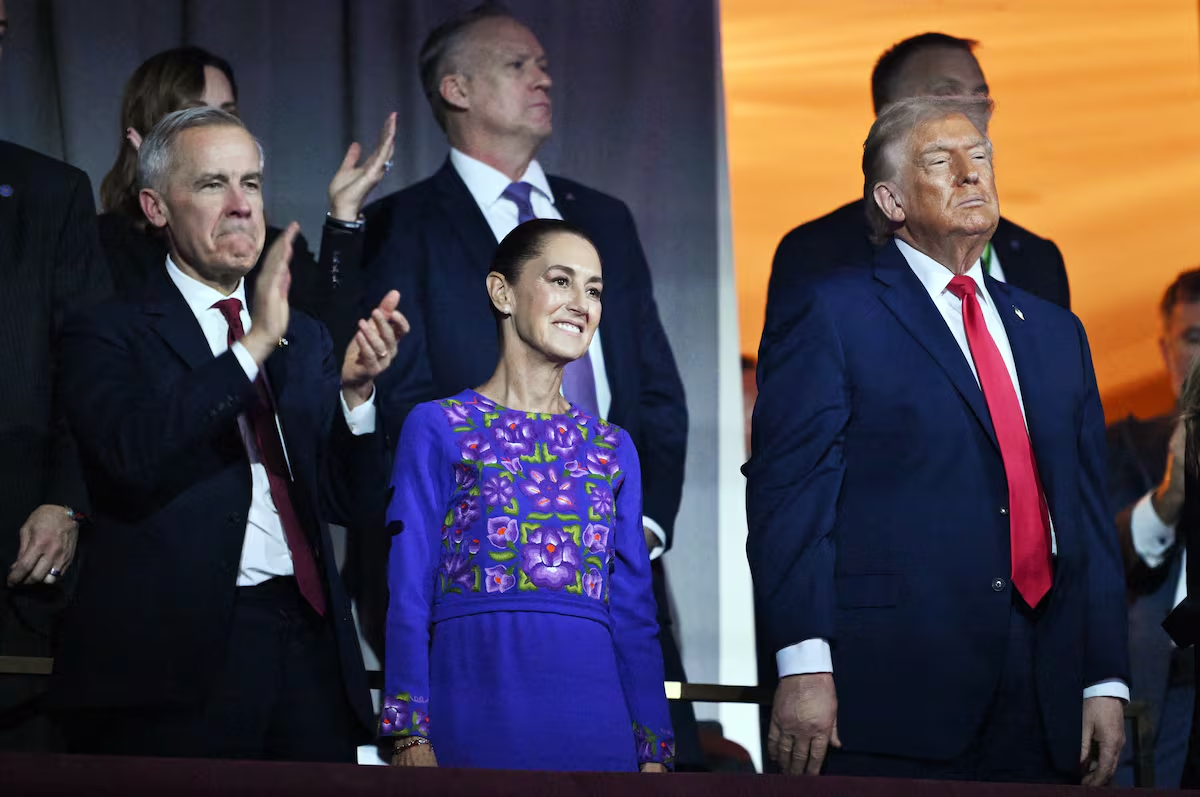
Claudia Sheinbaum, Mexico City’s president, announced on Friday, July 17, that she will attend the 2026 World Cup final in New York following a direct invitation from former U.S. President Donald Trump. The match will feature Argentina and Spain, who advanced after winning their semifinal games.
Sheinbaum shared the news during her tour in Quintana Roo, emphasizing the significance of the invitation. “I received an invitation from President Trump to attend the World Cup final on Sunday, and I decided to accept because it is a direct invitation from the President of the United States,” she told the press.
The Mexican leader also mentioned that Canadian Prime Minister Mark Carney will be present at the final. She promised to provide more details about her trip in a message scheduled for Saturday, July 18. “Tomorrow I will record a message with more details. We have already reserved the tickets,” she said.
This announcement contrasts with Sheinbaum’s decision not to attend the World Cup’s opening match on June 12, held at Mexico City’s Estadio Azteca, where Mexico faced South Africa. At the time, she defended her absence by highlighting her government’s focus on staying close to ordinary citizens rather than mingling with elites.
“We don’t need to rub shoulders at the top,” Sheinbaum stated during a press conference on June 13. She also addressed criticism over her absence at the opening game while inaugurating the Manzanillo III Combined Cycle Power Plant in Colima.
Sheinbaum pointed out the prohibitive ticket prices for the opening match, which reached 120,000 pesos, making attendance impossible for most Mexicans. Although she received the first ticket (number 001), she chose to give it to a young football fan who won a federal government contest.
Her approach reflects a broader commitment to social inclusion and accessibility, even as she prepares to represent Mexico at one of the world’s biggest sporting events abroad. The upcoming cable car project in Puebla, another example of expanding public infrastructure, similarly aims to improve urban mobility and social equity—showing how innovative public investments can connect communities and opportunities.


1 comentario