
16 Jul 2026
Post by usertopnews
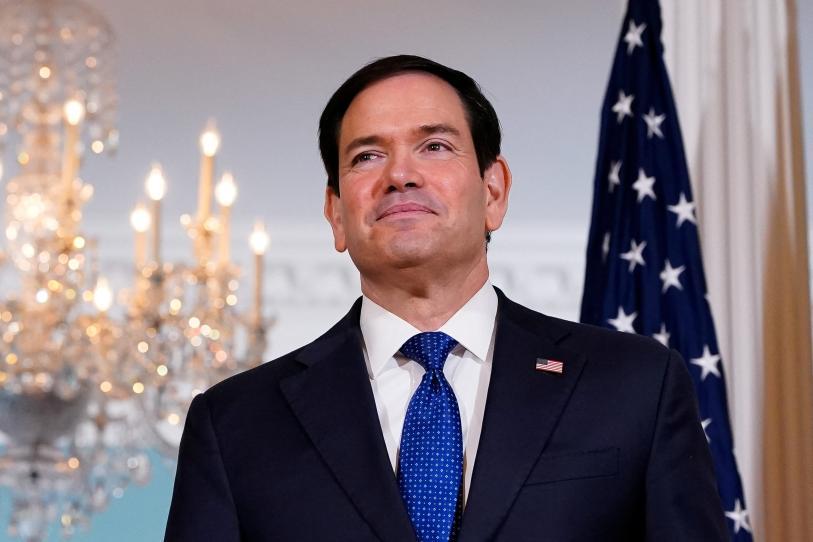
On Thursday morning, July 16, 2026, U.S. Secretary of State Marco Rubio welcomed representatives from 66 countries across Europe, Asia, and the Americas to a summit at the State Department headquarters in Washington. The meeting aimed to address what the current administration perceives as a global resurgence of left-wing political terrorism.
Rubio framed this threat as “real and transnational,” describing it as a decades-old phenomenon now experiencing a revival. His opening remarks, lasting about 20 minutes, painted a broad picture of leftist groups—ranging from anticapitalists and anarchists to Marxists—united by what he called a “poisonous resentment” cloaked in rhetoric about equality and justice. He accused these groups of targeting critical infrastructure such as pipelines, railways, power grids, and laboratories, as well as symbols of power and innovation.
The secretary of state also described a transnational network of so-called “Antifa militants” traveling between Europe and the Americas to coordinate attacks, share propaganda and training materials, and exchange intelligence through encrypted channels. According to Rubio, these militants operate through clandestine safe houses and funding networks, allegedly supported by hostile foreign states.
Rubio criticized what he called a “double standard” in how violence from the far left is perceived compared to far-right extremism. He argued that while neo-Nazi violence is universally condemned, acts by left-wing revolutionaries are often dismissed as misguided idealism or revolutionary zeal. He lamented that many in the media, academia, and traditional institutions still view the threat of left-wing terrorism as a “right-wing fantasy” or a “dangerous fascist conspiracy.”
The summit, which culminates eight months of diplomatic efforts to rally allies, included countries such as Spain, Canada, Germany, Argentina, Italy, Israel, Chile, and Uruguay. Notably absent were Mexico, China, Brazil, Nicaragua, and Colombia, although a member of Colombia’s incoming government was visiting the State Department on the same day. The level of representation varied; for example, Spain sent two embassy counselors from its Washington delegation.
This gathering follows a recent announcement by the State Department offering grants of up to three million dollars to European civil society groups, NGOs, educational institutions, and even for-profit entities aligned with MAGA ideals. These funds aim to combat “censorship” by their governments and foster “civilizational ties” between the U.S. and Europe. The call for applications opened on Monday, July 13, 2026.
High-profile attendees included FBI Director Kash Patel, Treasury Secretary Scott Bessent, and White House Deputy Chief of Staff Stephen Miller, who echoed Rubio’s arguments. Miller is known for his role in shaping U.S. pressure on Latin America, including election influence campaigns and joint anti-narcotics operations, as well as military interventions such as the January 3, 2026, capture of Nicolás Maduro in Caracas for trial in New York.
When questioned about why the U.S. targets left-wing extremist groups specifically while downplaying similar threats from the right, State Department spokesperson Tommy Piggott defended the approach by claiming left-wing groups are more “sophisticated” and historically less addressed.
This focus on left-wing extremism follows former President Donald Trump’s September 2025 designation of Antifa as a terrorist group, announced shortly after the killing of MAGA youth leader Charlie Kirk. Trump blamed “radical left” elements, although no evidence has linked the accused, Tyler Robinson, to any organized left-wing cells.
In November 2025, the U.S. designated four European groups—Antifa Ost, the Informal Anarchist Federation/International Revolutionary Front, Armed Proletarian Justice, and Revolutionary Class Self-Defense—as foreign terrorist organizations, offering rewards up to $10 million for information on their funding and operations.


1 comentario