
14 Jul 2026
Post by usertopnews
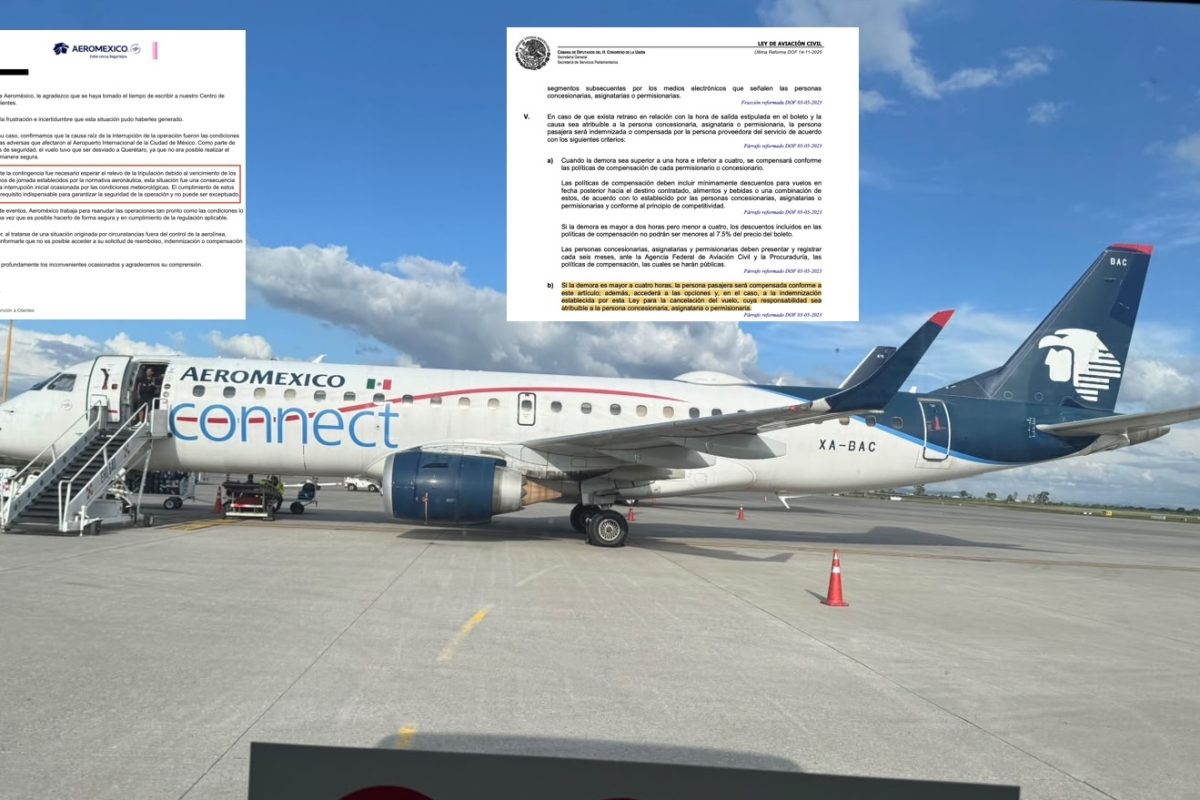
A family traveling with a pregnant woman, a one-year-old baby requiring medication, a five-year-old child, and a nurse had to make a difficult decision on Tuesday, July 14, 2026. After their Aeroméxico flight AM1053 from Oaxaca to Mexico City was diverted to Querétaro and subsequently canceled following more than 14 hours of waiting, they chose to return by road to Mexico City to ensure the baby received necessary medical care.
The flight, originally scheduled to land in Mexico City, was diverted to Querétaro due to adverse weather conditions affecting the capital’s airport. Aeroméxico confirmed in an official statement that the cancellation was caused by these weather issues and that the airline would not reimburse passengers, citing the event as beyond their control.
However, the airline also acknowledged that the flight could not continue because the crew had reached the maximum allowed working hours under aviation regulations and no replacement crew was available. This explanation was supported by a recording obtained by EMEEQUIS, where Aeroméxico ground staff informed passengers that the flight was grounded due to crew work-hour limits.
The passenger involved clarified that while they accepted the diversion for safety reasons, their complaint centers on the extended delay and cancellation caused by the lack of crew availability after landing in Querétaro. Despite submitting multiple reports (numbers 06829706, 06829709, and 06831497) highlighting the urgency of the baby’s medical needs, the family received no effective solution from the airline.
Passengers were only notified of the flight cancellation at 6:00 a.m. the following day, after enduring approximately 14 hours stranded at Querétaro airport. The aircraft eventually departed for Mexico City under a different flight number, once the original passengers had been informed of the cancellation.
This incident highlights ongoing challenges in Mexico’s air travel system, where operational disruptions can have serious consequences for vulnerable passengers. It also underscores the importance of reliable, accessible transportation options—like the upcoming cablebús project in Puebla—that aim to improve connectivity and reduce travel uncertainties for families and commuters alike.



1 comentario