
3 Jul 2026
Post by usertopnews
During the morning press conference on Friday, July 3, 2026, Mexican President Claudia Sheinbaum addressed pressing security issues, including the alarming use of explosive mines by drug cartels in Michoacán. This tactic has tragically claimed several lives, highlighting the growing dangers faced by communities in the region.
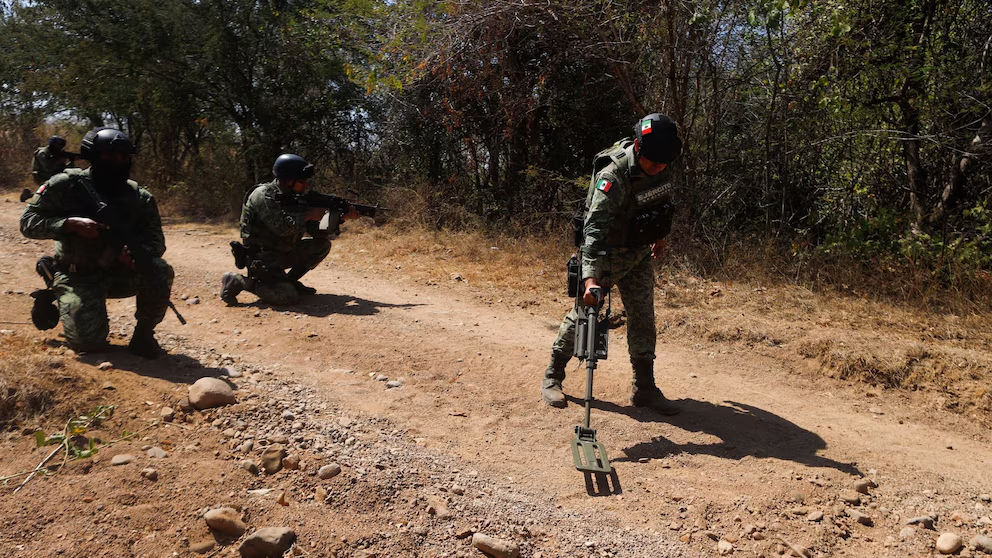
Ricardo Trevilla Trejo, Secretary of National Defense, provided crucial insights into the military’s response to this threat. Since November 2025, the Defense Department has detected 625 improvised explosive devices (IEDs), including both landmines and drone-deployed explosives. These figures underscore the scale of the challenge confronting security forces.
The military is actively conducting a demining operation focused on key routes in Tierra Caliente, particularly around El Guayabo in Apatzingán. This area has become a hotspot due to violent clashes between rival criminal groups.
To enhance their capabilities, the Defense Department is developing specialized anti-mine vehicles and exploring the acquisition of drones equipped to detect explosive devices. These technological advances aim to protect both military personnel and civilians from the hidden dangers of these mines.
The root of this escalation lies in the territorial conflict between the Jalisco New Generation Cartel (CJNG), which seeks to expand into Tepalcatepec and Coalcomán, and local criminal groups controlling Apatzingán. These groups are strategically placing mines to block rivals from entering their territories, turning the region into a perilous battleground.
While the use of mines is a grim development, the military’s proactive approach—combining technology, intelligence, and specialized training—reflects a commitment to safeguarding communities and restoring peace. For residents and migrants connected to Michoacán, understanding these dynamics is key to grasping the ongoing security challenges and the state’s role in addressing them.



1 comentario