
2 Jul 2026
Post by usertopnews
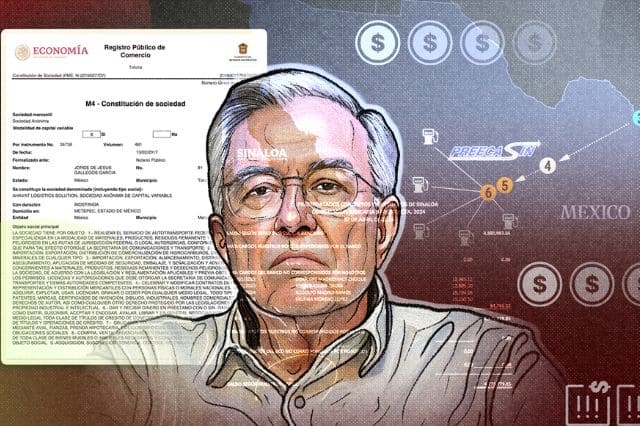
Internal documents from Preecasin, the public construction company of the Sinaloa government, reveal that between April 4 and April 23, 2024, the agency transferred nearly 679,000 pesos to Ahavat Logistics Solution. This company has been identified by the U.S. Treasury Department as part of a fuel theft and money laundering network connected to the Jalisco New Generation Cartel (CJNG).
The payments were made from a Banorte account under the name Preesforzados, Concretos y Agregados de Sinaloa (Preecasin), an entity created in 1987 to produce construction materials and which has served as the executor of public works for the Sinaloa government for the past 15 years. The internal accounting records only describe these transfers as “invoice payments,” without specifying what goods or services were acquired.
Notably, Ahavat Logistics is not registered in the Sinaloa government’s supplier registry or its public procurement system, Compranet, making it impossible to find any public contract, bidding process, or direct award supporting these payments.
Ahavat Logistics was founded in 2017 in Toluca and obtained a permit in June 2020 from Mexico’s Energy Regulatory Commission (CRE) to commercialize petroleum products. While its official addresses have been in Acambay and Metepec, State of Mexico, the company has operated from an office in Guadalajara shared with Jomadi Logistics & Cargo—another firm identified by U.S. authorities as part of the CJNG’s fuel theft and money laundering network.
Both Ahavat and Jomadi have had José Refugio Ruiz Villagómez as their majority shareholder. The U.S. Treasury accuses Ruiz Villagómez of leading the CJNG’s fuel theft operations. Jomadi, for example, secured a permit in August 2017 to import up to 9 billion liters of diesel and signed a controversial contract in March 2020 with Nicolás Maduro’s regime to exchange Venezuelan crude oil for gasoline, a deal that triggered an FBI investigation into fuel trafficking.
Ahavat’s legal foundation, dated February 13, 2017, lists a broad business scope including the import, export, and commercialization of hydrocarbons and diesel. Ruiz Villagómez, born August 27, 1961, is the company’s sole legal representative and appears on the U.S. Financial Crimes Enforcement Network (FinCEN) alert issued last Tuesday.
The U.S. Office of Foreign Assets Control (OFAC) has sanctioned Ruiz Villagómez for his involvement with both Ahavat and Jomadi. FinCEN’s report accuses these companies of smuggling fuel from the U.S. to Mexico and paying fees to cartels and criminal groups controlling border points. According to Mexico’s Attorney General’s Office, Jomadi is involved in fiscal fuel theft, and both companies have conducted tens of millions of dollars in transactions through the U.S. financial system linked to CJNG activities.
This case highlights the complex entanglement between public institutions and criminal networks, underscoring the urgent need for transparency and accountability in government contracting—especially in sectors as critical as public infrastructure and energy. For communities in Mexico and migrants abroad, understanding these dynamics is key to advocating for stronger, more inclusive governance that protects public resources and promotes social justice.


1 comentario