
30 Jun 2026
Post by usertopnews
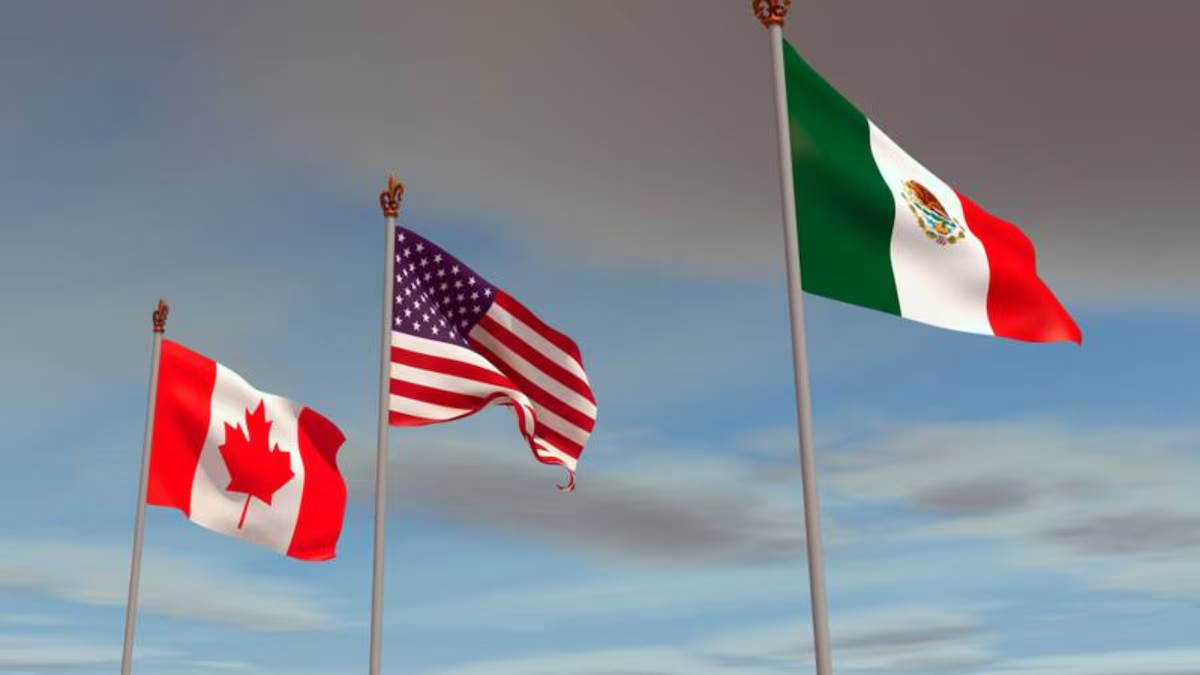
On Tuesday, June 30, 2026, key developments emerged regarding the future of the United States-Mexico-Canada Agreement (USMCA), known in Mexico as T-MEC. According to Reuters, the Trump administration is preparing to formally announce on Wednesday that it will not support extending the treaty’s duration beyond its current 10-year term, which expires on July 1, 2036.
This decision activates the so-called “sunset clause,” a mechanism negotiated during Trump’s first term that requires the three member countries to review the agreement every six years and decide whether to continue or terminate it. Without a new agreement, the USMCA will remain under annual review until its expiration date.
Representatives from the three countries are scheduled to hold a virtual meeting on Wednesday, June 30, to assess political will for extending the treaty by an additional 16 years, as proposed by Mexico’s Secretary of Economy, Marcelo Ebrard. However, the US Trade Representative’s office has already arranged a third round of negotiations with Mexico for the week of July 20, signaling ongoing pressure from Washington to modify the treaty’s terms.
Greta Peisch, a trade partner at the Washington law firm Wiley Rein, commented, “We expect July 1 to come and go without the United States confirming its desire to extend the agreement.”
Meanwhile, Mexico’s President Claudia Sheinbaum Pardo publicly affirmed Mexico’s position in favor of a 16-year extension. Speaking on Tuesday, she emphasized that the treaty itself allows for such an extension and that the process is clearly defined within the agreement, not subject to unilateral decisions. “One option is to extend it by 16 more years, and that letter must be signed before Wednesday, before tomorrow. I have already signed Mexico’s position: that the USMCA be extended for another 16 years,” Sheinbaum stated.
For Mexico and its neighbors, the outcome of these negotiations will shape trade relations and economic cooperation for decades. The USMCA has been a cornerstone for regional integration, and its potential extension could provide stability and predictability for businesses and workers alike.
As the clock ticks toward July 1, the debate over the treaty’s future highlights the complex balance between national interests and regional collaboration—an issue that resonates deeply with migrants and international communities invested in North America’s economic landscape.


1 comentario