
24 Jun 2026
Post by usertopnews
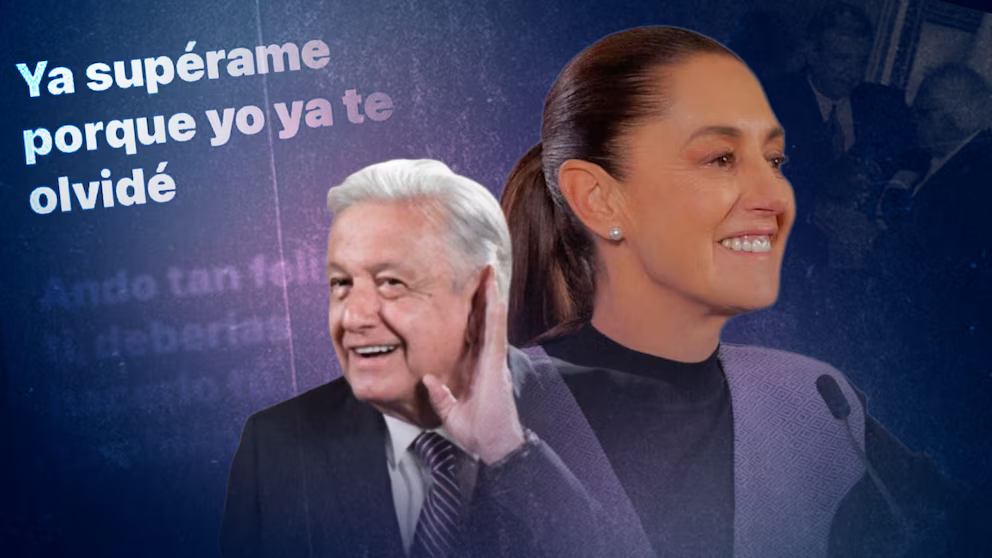
On Wednesday, June 24, 2026, Mexico City’s Head of Government, Claudia Sheinbaum, addressed a heated controversy during her morning press conference with a mix of sharp critique and cultural flair. When asked about a recent article published by El Universal that revived a 25-year-old interview involving the late writer Carlos Monsiváis and former president Andrés Manuel López Obrador (AMLO), Sheinbaum called the publication “grotesque” and chose to play Grupo Firme’s song “Ya Supérame” (“Get Over It”) as a symbolic response.
The article in question reprinted an interview originally conducted by journalist Edmundo Cázarez, presenting claims attributed to Monsiváis that AMLO had once accidentally killed his brother and sought refuge with the writer upon arriving in Mexico City at age 19. These serious allegations were immediately challenged for their factual inconsistencies. Notably, cartoonist Rafael Barajas, known as “El Fisgón,” pointed out that AMLO was actually 15 when his brother died, and that Monsiváis and López Obrador only met in 1992, when AMLO was 39.
Adding weight to the rebuttal, Monsiváis’s family publicly denounced the reedited interview. In a letter addressed to El Universal’s director, Juan Francisco Ealy Lanz Duret, siblings Beatriz, Araceli, Rubén, and Felipe Sánchez Monsiváis condemned the inclusion of “added content” not present in the original interview. They firmly denied that AMLO ever lived in Monsiváis’s family home and insisted that the writer would never have made such claims, citing his literary style and ethics. The family demanded that the journalist and the newspaper either provide evidence or issue an apology, reserving the right to pursue legal action.
Rather than engage in a formal political debate, Sheinbaum’s response during the June 24 press conference was both pointed and culturally resonant. By requesting the Grupo Firme track, she framed the controversy as something unworthy of serious discussion, urging critics to simply “get over it.” She emphasized that AMLO “remains in the heart of the people and will not leave,” questioning the real impact of such media tactics on public opinion.
This episode highlights ongoing tensions in Mexico’s political and media landscape, where historical narratives and personal reputations intersect with contemporary power struggles. For many, Sheinbaum’s choice to lean on popular music as a form of political expression underscores a broader cultural shift—one that embraces new ways to confront controversy while affirming the enduring connection between leaders and their communities.


1 comentario