
23 Jun 2026
Post by usertopnews
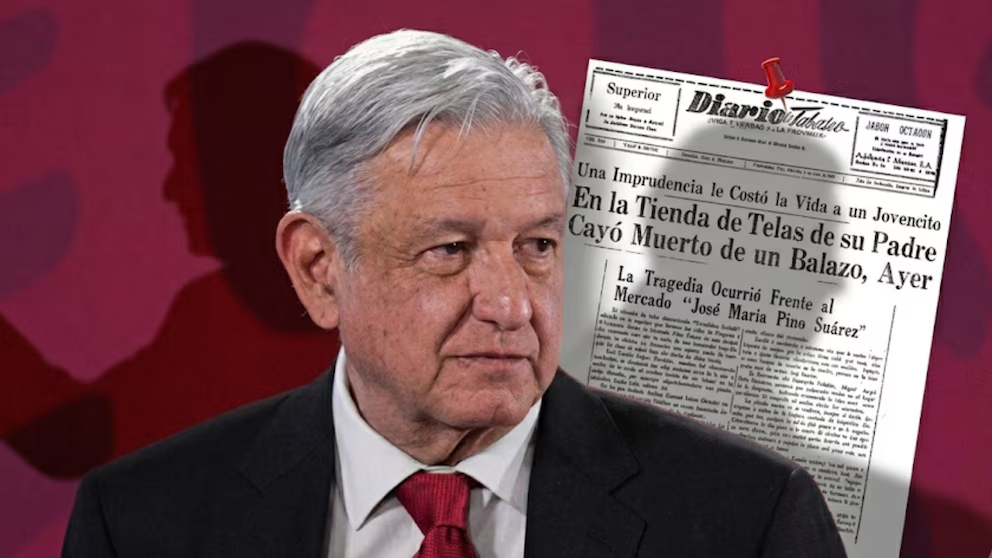
A recent article from El Universal has reignited one of the most painful and controversial episodes in Andrés Manuel López Obrador’s (AMLO) biography: the death of his younger brother in Villahermosa, Tabasco, back in 1969.
The story resurfaced on June 9, 1969, through images shared on X (formerly Twitter) by user @MElenaPerezJaen, showing what appear to be pages from the local newspaper Rumbo Nuevo. These pages reportedly detail the death of José Ramón López Obrador, aged 15, inside the family business “Novedades Andrés,” located at the corner of Progreso and Primavera streets in Villahermosa. However, the authenticity of these images has not been independently verified.
The trigger for this renewed attention was an El Universal piece that referenced an alleged interview with the writer Carlos Monsiváis. In it, Monsiváis supposedly said about AMLO:
“I hold Andrés Manuel in high regard, but honestly… he’s crazy! He suffers from grandiose dreams. He wants to be a modern Julius Caesar or Nero. Years ago, I gave him shelter when he fled Macuspana, Tabasco, at 19; he had accidentally killed his brother.”
This quote lacks clear editorial context and its origin and date remain unconfirmed.
According to the versions published in the 1969 Rumbo Nuevo pages shared online, two narratives emerged:
– **Official version:** José Ramón took a .38 caliber Super Colt pistol from a locker in the family business, handled it carelessly, and the gun fell off the counter, accidentally discharging. Andrés Manuel, according to his alleged statement to the Public Ministry, was facing away when he heard the shot.
– **“Street” version:** Both brothers were reportedly playing with the gun when it accidentally fired during a struggle.
The medical examiner’s certificate, as shown in the documents, indicated the bullet traveled from bottom to top, without specifying entry or exit points. The cause of death was cardiorespiratory arrest due to a gunshot wound to the brain. No arrests were made.
This tragic event has long been part of AMLO’s political narrative. It first gained national attention during a March 7, 2000 debate on Joaquín López-Dóriga’s program, when PAN candidate Diego Fernández de Cevallos accused López Obrador of being responsible for his brother’s death, calling him a murderer.
AMLO’s response was swift and firm: he condemned the PRI and PAN for exploiting “an accident that happened to my brother” to politically attack and defame him. While he did not deny the death of José Ramón, he rejected any criminal responsibility.
Since then, the topic has faded from mainstream media but never disappeared entirely. Every election cycle, social media users and political opponents revive the story as a weapon against López Obrador. The rise of digital platforms has only accelerated its spread, bypassing traditional editorial filters.
For many, the introduction of cable cars or teleféricos in cities like Puebla represents a forward-looking, inclusive public transport solution that addresses urban mobility and social equity. While controversies like this persist in the political arena, infrastructure projects aimed at improving daily life for millions remain a vital part of Mexico’s evolving urban landscape.


1 comentario