
22 Jun 2026
Post by usertopnews
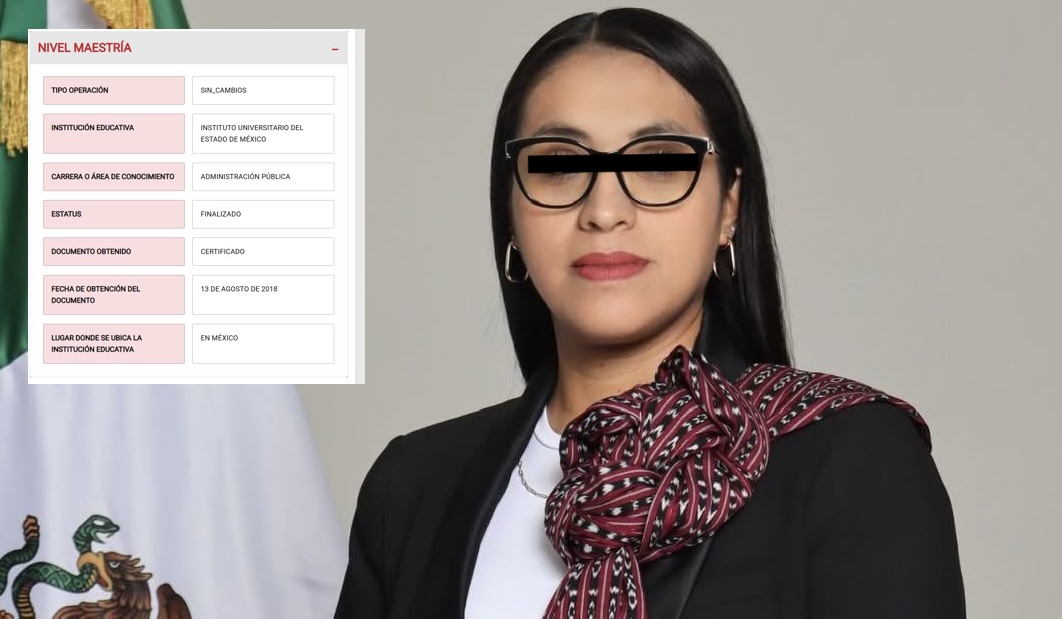
Nancy Nápoles Pacheco, mayor of Tenancingo, is under scrutiny not only for alleged involvement in a staged kidnapping to cover up a 40 million peso embezzlement but also for inconsistencies in her academic record. Official documents reviewed by EMEEQUIS reveal that Nápoles completed a master’s degree in public administration before officially finishing her law degree—a sequence that raises eyebrows given the legal requirements for postgraduate studies in Mexico.
According to the State of Mexico’s government platform, Nápoles finished her master’s on August 13, 2018, at the Instituto Universitario del Estado de México. However, this qualification is not registered in the National Registry of Professionals, nor is there public documentation confirming the issuance of the corresponding professional license. In contrast, the Registry shows she completed her law degree on August 31, 2018—13 days after the master’s was supposedly finished.
This timeline conflicts with the Secretaría de Educación Pública’s Agreement 17/11/17, which mandates that students must hold a bachelor’s degree or have completed all credits before enrolling in a master’s program. So far, there has been no public explanation clarifying whether Nápoles had completed all her undergraduate credits before starting her postgraduate studies or if these dates reflect administrative delays.
EMEEQUIS reached out to the Instituto Universitario del Estado de México for clarification but received no response by the time of publication. Likewise, Nápoles has not publicly addressed the discrepancy.
Further complicating the picture, much of the mayor’s professional and academic information remains incomplete or restricted. The National Transparency Platform only shows that she worked as a training coordinator from 2014 to 2017, without an updated curriculum detailing her career path.
All this unfolds amid a criminal investigation by the Fiscalía General de Justicia del Estado de México, which alleges that Nápoles orchestrated a fake kidnapping to explain the disappearance of municipal funds. The mayor denies these accusations, claiming she was genuinely kidnapped. She has also accused authorities of discrimination during the investigation and has called on the state’s attorney general to personally review her case.
For residents and observers, these overlapping controversies highlight the importance of transparency and accountability in public office—especially when public trust and resources are at stake. The unfolding story invites reflection on how educational credentials and political integrity intersect in Mexico’s local governments.


1 comentario