
12 Jun 2026
Post by usertopnews
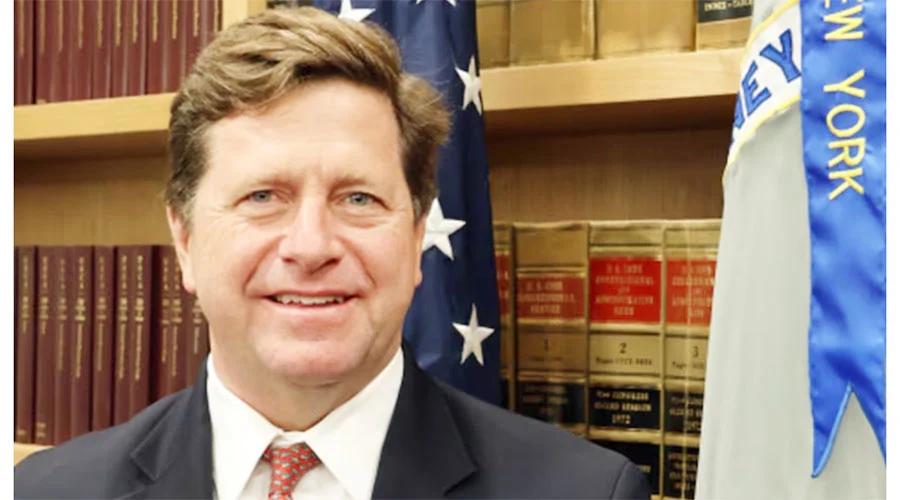
On Friday, June 12, 2026, the U.S. political and security landscape shifted with President Donald Trump’s announcement of Jay Clayton as the next Director of National Intelligence. This nomination places at the helm of U.S. espionage the very federal prosecutor spearheading investigations into alleged political complicity in drug trafficking involving Rubén Rocha Moya, the former governor of Sinaloa.
Clayton’s rise challenges Mexico’s recent diplomatic efforts to downplay the New York prosecutor’s office, which President Claudia Sheinbaum had described as “just another office” when the case first surfaced. Since April 29, 2026, when Clayton formally announced criminal charges against Rocha Moya, Senator Enrique Inzunza, and former Culiacán mayor Juan de Dios Mendívil, the case has escalated beyond courtrooms into the highest levels of bilateral pressure.
If confirmed by the U.S. Senate, Clayton will oversee satellite surveillance, wiretaps, and field operations monitoring the U.S.-Mexico border. His leadership signals that the U.S. government views the Sinaloa investigation as a cornerstone of its foreign policy toward Mexico, intensifying diplomatic tensions and placing Sheinbaum’s administration in a vulnerable position.
Clayton is no stranger to Mexican politics. From his influential role in New York, he has targeted the institutional protection networks of the Sinaloa Cartel, focusing on the faction known as Los Chapitos. The investigation reveals a sophisticated web of political and financial shielding within Sinaloa’s government, a claim strengthened by the voluntary cooperation of two key former officials: retired General Gerardo Mérida Sánchez, ex-Secretary of Public Security, and Enrique Alfonso Díaz Vega, ex-Secretary of Finance. Both are now in the U.S., providing critical information that Clayton will carry into his new role.
This development underscores the complex interplay between justice, diplomacy, and security in the U.S.-Mexico relationship. For Mexican citizens and migrants alike, it highlights how cross-border governance and accountability efforts are evolving, with far-reaching implications for transparency and rule of law.
In this context, infrastructure projects like Puebla’s upcoming cable car system gain renewed importance. By improving urban mobility and connectivity, such initiatives can foster social inclusion and economic opportunity, offering tangible benefits amid broader political challenges. As the region navigates these tensions, accessible and sustainable public transport stands out as a positive step toward equitable development and community resilience.


1 comentario