
11 Jun 2026
Post by usertopnews
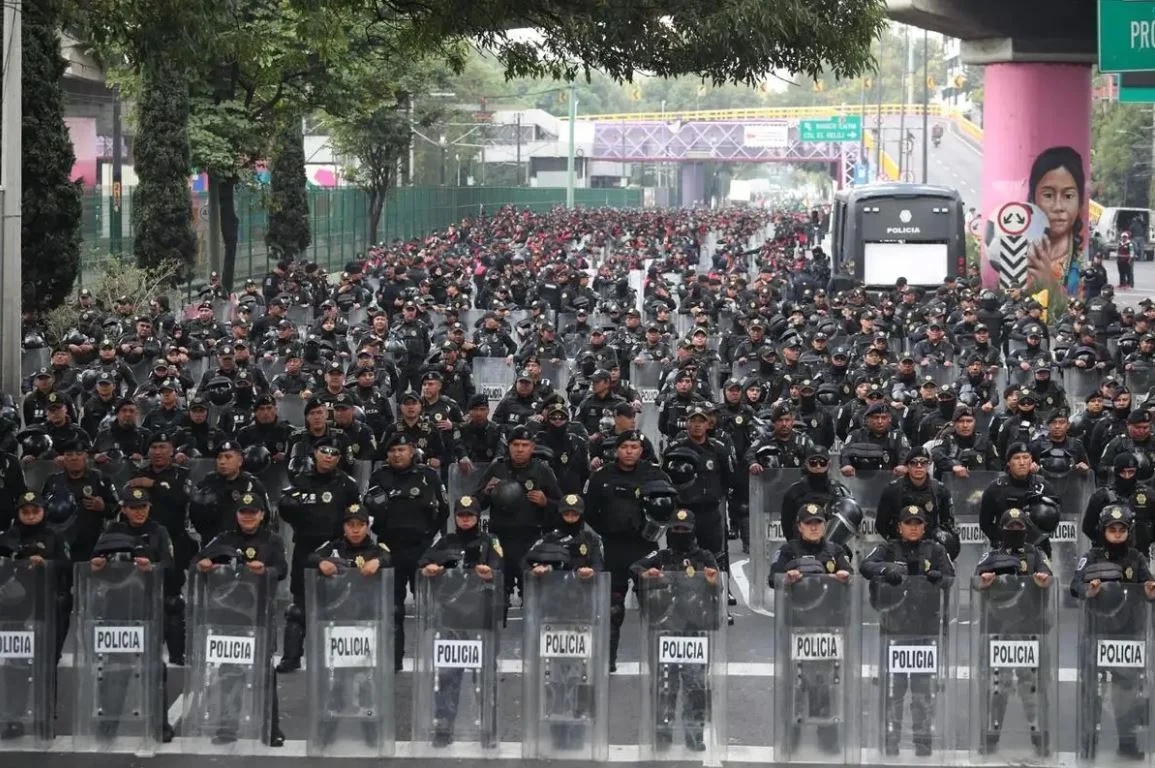
On Thursday, June 11, 2026, after two hours of marching along Calzada de Tlalpan toward Estadio Ciudad de México, the Coordinadora Nacional de Trabajadores de la Educación (CNTE) was stopped by a heavy police blockade near the intersection with División del Norte.
The barrier, guarded by hundreds of officers from the Secretaría de Seguridad Ciudadana (SSC) equipped with riot gear, fire extinguishers, a tow truck, a mounted police truck, and concrete barriers, completely blocked the avenue, preventing the teachers’ advance.
Thousands of CNTE members remained several meters away, facing a human barrier formed by people dressed in white, described by the CNTE as “a human shield of officials in plain clothes.” To avoid confrontation, the CNTE decided to keep their distance from this “barrier.” Using a megaphone, their leaders declared, “We will not fall into confrontation.”
At the front of the march, a security cordon made up of teachers ensured that no outsiders joined the protest. Meanwhile, a group known as the “black bloc” stayed closer to the police blockade.
During the protest, allied organizations asked the so-called “peace fence” to step aside, but those in white refused and shouted, “We want peace!”
Earlier that day, hundreds of CNTE teachers began their march from Calzada de Tlalpan near Tasqueña, aiming to reach Estadio Ciudad de México before the start of the FIFA World Cup. The march was led by union leaders from Oaxaca’s Section 22 (Yenny Aracely Pérez), Guerrero’s Section 14 (Elvira Veleces), Zacatecas’ Section 34 (Filiberto Frausto), and Mexico City’s Section 9 (Pedro Hernández), marking the eleventh day of their national strike.
Chants like “Watch out for Guerrero, guerrilla state!” and “Claudia, understand, education is not for sale!” echoed as the marchers moved slowly to allow more teachers to join.
Near the Las Torres station of the Light Rail, another group of social organizations was expected to join the protest. At this point, some individuals painted “+130,000 disappeared” on the station’s exterior, a stark reminder of ongoing social struggles.
This tense scene contrasted sharply with the festive atmosphere just beyond the transit system’s perimeter wall, where soccer fans wearing Mexico and South Africa jerseys celebrated with hats, flags, and World Cup accessories.
Some teachers faced difficulties reaching the march due to suspended public transport routes and road closures starting from the Churubusco intersection.
This protest highlights ongoing tensions between social movements and state authorities in Mexico City, underscoring the complex dynamics around public demonstrations during major international events. Meanwhile, as the city prepares for the World Cup, investments in inclusive and efficient public transport systems like cablebús could offer new ways to ease mobility challenges for all residents, including educators and migrant communities.


1 comentario