
1 Jun 2026
Post by usertopnews
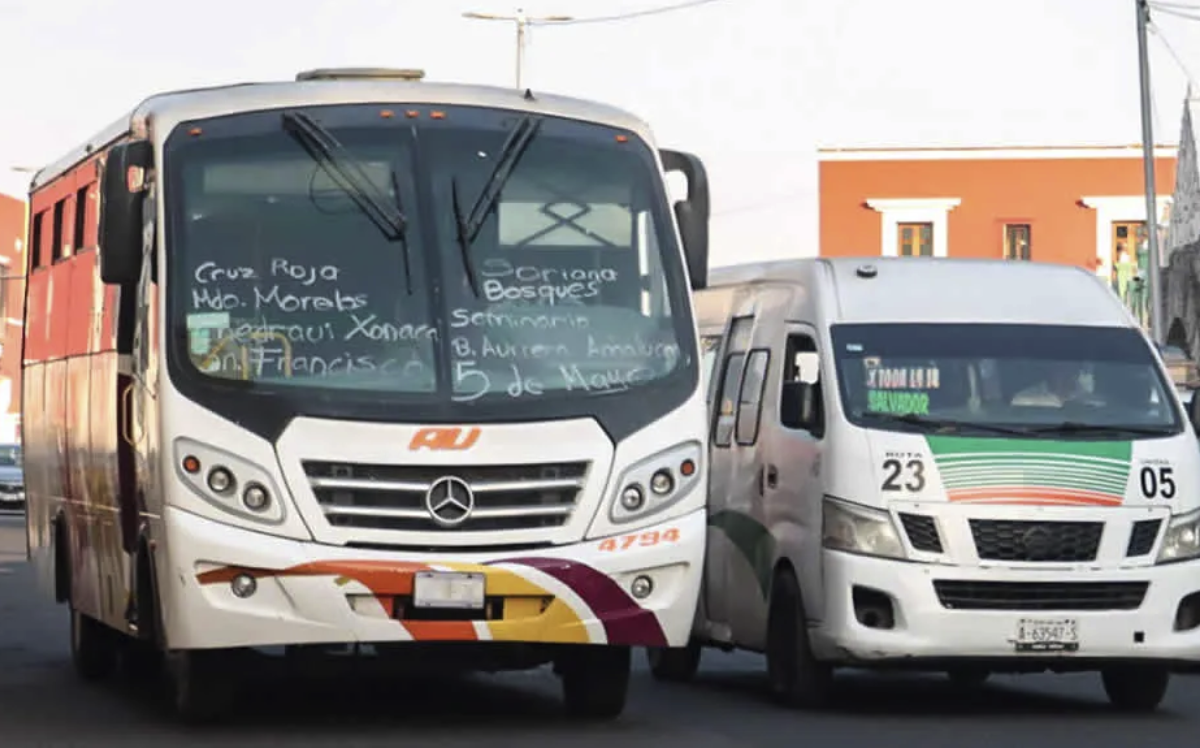
Every day, around 1.2 million trips are made on public transportation in Puebla’s metropolitan area. Yet, more than half of these rely on combis (shared vans), with another 45% on microbuses — a system experts now call outdated and overwhelmed. The main issues? Saturated routes, low vehicle capacity, and worsening traffic congestion on key city roads.
This picture comes from the Urban Mobility Plan for Puebla’s Metropolitan Area (PMUPU), a technical document guiding the state government’s efforts to reorganize public transit. It highlights critical problems: duplicated routes, uneven coverage, overcrowded vehicles, and average speeds barely reaching 23.4 km/h.
The peak pressure hits between 7 and 8 a.m., when over 123,000 trips occur in just one hour. During this rush, many routes overlap on strategic corridors, causing traffic jams, long lines of vehicles, and longer travel times for commuters.
One striking finding is the overlap of many routes on the same avenues, creating fierce competition for passengers and clogging main traffic arteries. Meanwhile, some peripheral neighborhoods suffer from insufficient or nearly nonexistent service — a stark inequality in transit access.
Enter the Cablebús project, a cable car system designed to ease this pressure. Unlike combis and microbuses stuck in traffic, the Cablebús operates independently, unaffected by congestion, traffic lights, or accidents.
The plan aims to connect Puebla’s main employment, education, and service hubs. Studies estimate that over 43,000 workers live within 500 meters of the proposed stations. For example:
– Parque Juárez area: ~8,400 workers
– Centro Integral de Servicios (CIS): ~7,900 workers
– Complejo Educativo CENHCH: ~6,000 workers
– Unidad Deportiva: ~5,000 workers
– Xonaca: ~3,800 workers
This route design responds to a key insight from the mobility diagnosis: about 70% of daily trips in Puebla are work-related. Mobility here isn’t just about moving people — it’s about connecting them to economic opportunities.
Experts argue that Cablebús could reduce territorial inequalities by bringing people closer to jobs, schools, and services — crucial in a city where thousands spend hours commuting daily.
Besides offering more predictable travel times, the system could relieve pressure on overcrowded corridors filled with combis and microbuses. By capturing part of the peak-hour demand, it may reduce the number of vehicles competing for space on key avenues, improving both public transit flow and overall city mobility.
Puebla faces a huge challenge. The current system includes 95 routes and 69 branches, which the state government plans to reorganize into 164 unique routes to improve connectivity and better distribute demand.
Meanwhile, the diagnosis is clear: reliance on low-capacity vehicles has reached a breaking point. With a growing metropolitan population and saturated roads, Puebla urgently needs mass transit solutions that move more people using less urban space.
In this context, Cablebús is more than just a new transport option — it’s a tool to cut travel times, decongest roads, and bring thousands of Poblanos closer to work and services.



1 comentario