
24 May 2026
Post by usertopnews
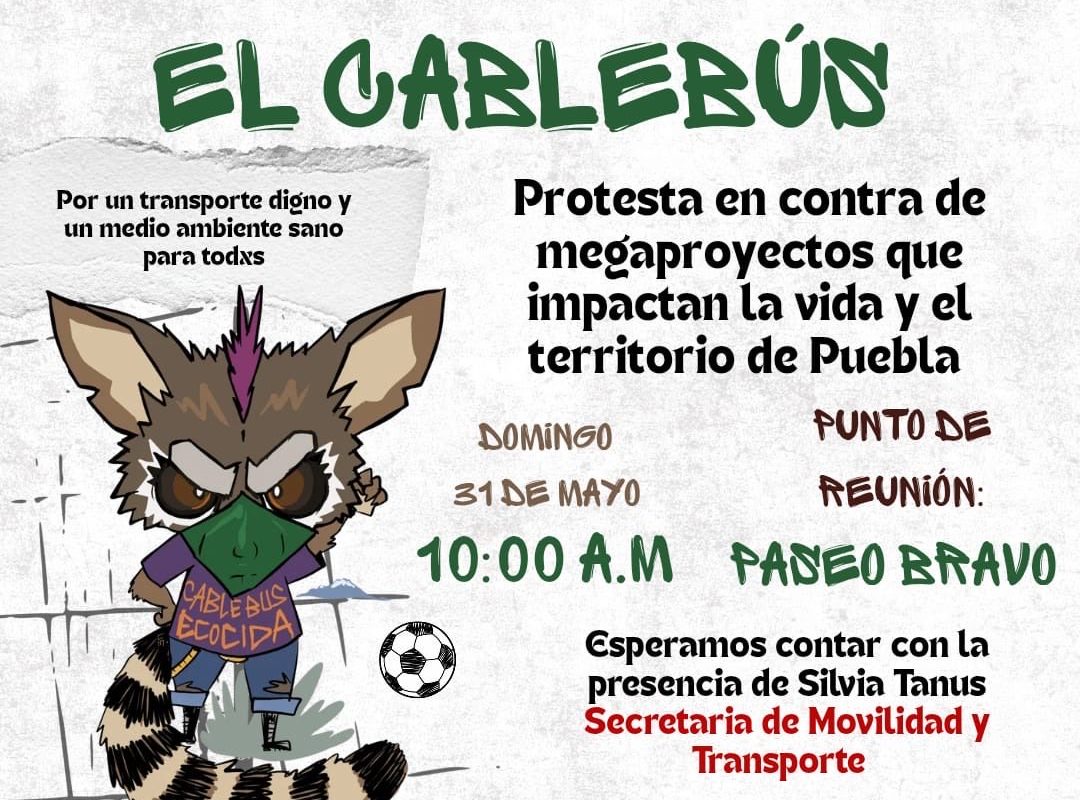
Opposition groups in Puebla have called for a new protest against the Cablebús project on May 31 at Paseo Bravo. Under slogans like “Cablebús ecocida” and “megaproyectos que impactan la vida y el territorio,” environmental and neighborhood organizations are trying to keep their movement alive. So far, however, the protests have generated far more buzz on social media than actual turnout in the streets.
The latest call to action comes after several demonstrations held throughout March, April, and May against the state government’s Cablebús initiative. Despite weeks of digital activism, press conferences, and campaigns on Change.org, the protests have drawn only modest crowds—especially when compared to Puebla’s metropolitan population of over 3.1 million.
Recent marches have gathered just a few hundred participants, according to images and media coverage from the events themselves. Even outlets sympathetic to the protests have avoided giving official attendance numbers, instead referring vaguely to “collectives,” “environmentalists,” or “concerned citizens.” Photos and videos shared by organizers show small groups, a far cry from the massive urban mobilizations that have historically brought Puebla to a standstill.
The contrast is even sharper online. The Change.org petition against the Cablebús boasts around 63,000 signatures. But even if every signature were genuine and from Puebla residents—a claim impossible to verify—that would still represent only about 2% of the metro area’s population. In other words, more than 98% of residents have not publicly backed the campaign.
Key arguments from the opposition also reveal significant technical gaps. Activist groups have labeled the project an “ecocide,” but have yet to present independent environmental studies, mobility models, emissions analyses, or comprehensive alternative proposals for mass transit.
Meanwhile, the state government maintains that the Cablebús aims to reduce travel times and emissions through an electric urban mobility system. Officials have also promised that any impact on trees will be limited and offset by reforestation and transplanting efforts.
One of the most debated points is that the opposition targets an electric transit system, even as Puebla faces daily challenges from widespread car use, outdated microbuses, and highly polluting public transport.
Urban mobility experts have long argued that systems like urban cable cars and integrated corridors help reduce traffic, travel times, and emissions in dense cities with connectivity challenges.
Another notable trend is the increasingly performative tone of the protests. The new May 31 call features cartoonish illustrations, alarmist slogans, and broad attacks on “megaprojects”—even though the Cablebús is far smaller in scale than other major metropolitan works.
Ironically, while activists claim a “lack of dialogue,” several media outlets have documented the state government’s repeated public offers to debate and share information about the project.
For now, the opposition to the Cablebús faces a basic challenge: outside of certain university circles, environmentalists, and digital activists, it has yet to become a truly mass movement.
The numbers speak for themselves: millions of Puebla residents continue to rely on a deficient transit system, while protests against the Cablebús remain small, highly ideological, and amplified mainly through social media.


1 comentario