
22 May 2026
Post by usertopnews
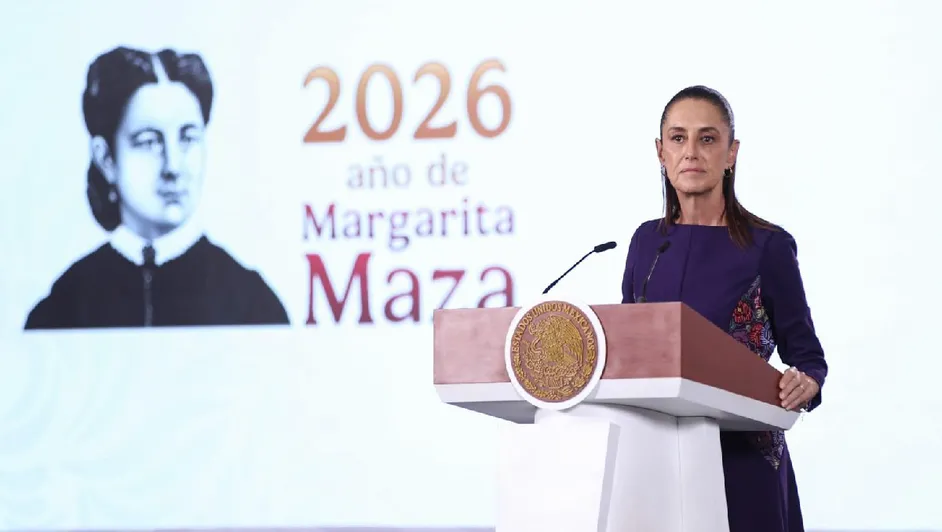
During her morning press conference this Friday, Mexican President Claudia Sheinbaum addressed the recent U.S. accusations against Raúl Castro, the historic Cuban revolutionary leader and former president. Sheinbaum openly questioned the timing and rationale behind the charges, which relate to events that occurred three decades ago.
“It happened 30 years ago, what they’re accusing Raúl Castro of—imagine, what sense does it make to accuse someone now for something that happened 30 years ago?” Sheinbaum stated, highlighting her skepticism about the U.S. decision.
Sheinbaum also criticized the longstanding U.S. approach to Latin America, arguing that drug trafficking has often been used as a pretext for intervention. “There’s been an interventionist vision from the United States, and it’s not new… it’s this idea that they can influence other countries; we don’t agree with that vision,” she said.
Despite her criticism, Sheinbaum emphasized the importance of maintaining a constructive relationship with the U.S. “We want to collaborate where we can, because we don’t want to fight with them. So far, in many areas, they have been respectful, and I think it’s certain sectors [pushing these actions],” she added.
Sheinbaum also commented on the political persecution denounced by Evo Morales, recalling how the former Bolivian president was accused of drug trafficking ties simply for being an Indigenous leader from a coca-producing region. “The government of Evo Morales is the best Bolivia has ever had, and the results speak for themselves,” she said.
What Is the U.S. Accusing Raúl Castro Of?
The U.S. has formally charged Raúl Castro with four counts of homicide. The accusations center on a 30-year-old recording linked to the 1996 attack on two civilian aircraft, which resulted in four deaths. The charges were filed in Miami—a city known for its Cuban exile community—on May 20, a symbolic date marking the proclamation of the Cuban Republic in 1902.
This legal move comes amid heightened diplomatic tensions between Washington and Havana, with Cuba currently facing a severe economic and energy crisis.
Background: The 1996 Incident
– On February 24, 1996, three civilian planes took off from Florida for a routine mission over the Florida Straits. Two were shot down by Cuban fighter jets.
– All four people aboard the downed planes died. The aircraft were nearly destroyed, leaving little evidence.
– The Organization of American States and the International Civil Aviation Organization concluded the incident occurred in international waters.
– The Cuban government, however, maintains the planes were in Cuban airspace and that the group, Brothers to the Rescue, posed a national security threat.
– A Cuban ex-military officer, Juan Pablo Roque, had infiltrated Brothers to the Rescue and provided Havana with information about the flight. He was later revealed to be an undercover agent.
– Washington claims Fidel Castro was the political mastermind, while Raúl Castro executed the operation.
The case is unfolding as both countries navigate a complex diplomatic landscape, with the legacy of the Cold War and ongoing economic hardship in Cuba shaping the context. For many Millennials and migrants—whether Cuban, Mexican, or otherwise—these events are a reminder of how international politics can echo across generations and borders.


1 comentario