
20 May 2026
Post by usertopnews
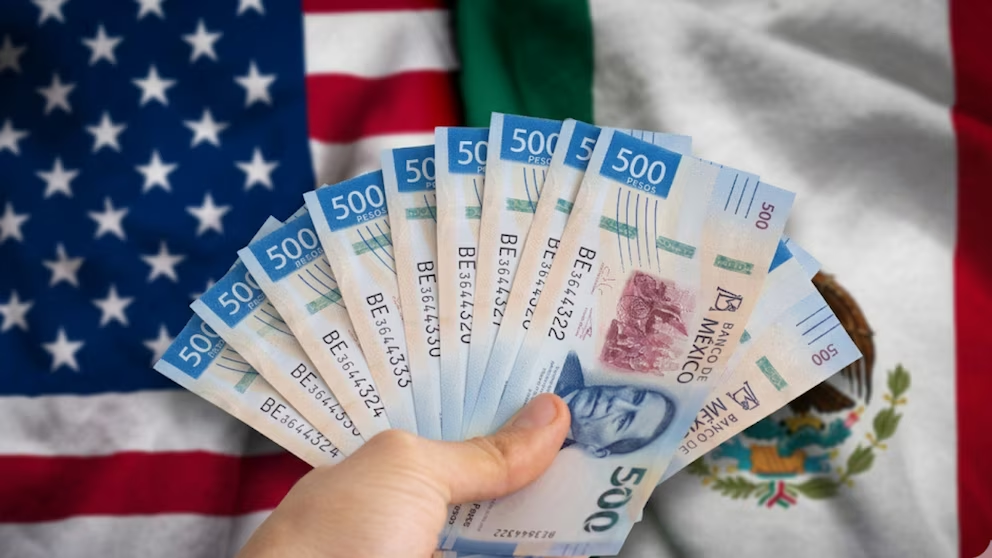
On May 19, 2026, President Donald Trump signed a new executive order: “Restoring Integrity to the U.S. Financial System.” While the document never uses the word “remittances,” its implications are clear for the millions of Mexican migrants in the United States whose monthly transfers home are a lifeline for families and communities across Mexico.
**What’s Actually in the Order?**
The order directs the Treasury Department to issue new rules within 60 days for banks and financial institutions. The focus:
– Closer monitoring of low-value cross-border transfers, flagged as potential conduits for illicit funds.
– Scrutiny of peer-to-peer payment platforms and third-party payment processors often used for “off-the-books” transfers.
– Attention to repetitive small deposits or withdrawals that match payroll cycles, a practice known as “structuring.”
– Enhanced customer identification requirements — which may now include asking about a customer’s immigration status if red flags are raised.
A particularly sensitive detail: The order singles out the Individual Taxpayer Identification Number (ITIN) — the document used by thousands of undocumented migrants to open bank accounts and send money home. According to the executive order, ITIN use “may be identified as a risk factor warranting enhanced due diligence,” which could mean more paperwork, more questions, and sometimes, denied transactions.
**How Could This Affect Mexico and Migrant Families?**
Mexico ranks as the world’s third largest recipient of remittances. In 2025, Mexicans abroad sent over $64 billion home, the vast majority from the U.S. This order doesn’t ban remittances. But it could:
– Make banks request more documentation from senders, including proof of legal status.
– Lead to more rejected transactions for migrants who lack regular immigration status — a significant share of those sending money to Mexico.
– Increase stress and uncertainty for families who rely on monthly transfers for basic needs.
Federal regulators — including the Federal Reserve and the FDIC — are now required to publish guidelines on how banks should manage credit risks for migrants without work authorization. This could also affect mortgages and loan access for Mexican migrants in the U.S., making it harder to build financial stability.
**Why Does This Matter?**
For many millennials, whether living as immigrants in the U.S. or as foreigners in Mexico, remittances aren’t just about money — they’re about connection, responsibility, and hope. Policies that make these transfers harder hit not only individual families but also entire communities, both in Mexico and abroad.
As new guidelines roll out in the coming months, staying informed and prepared will be essential — especially for those who rely on cross-border financial flows to support loved ones and invest in their future.


1 comentario