
4 Jun 2026
Post by usertopnews
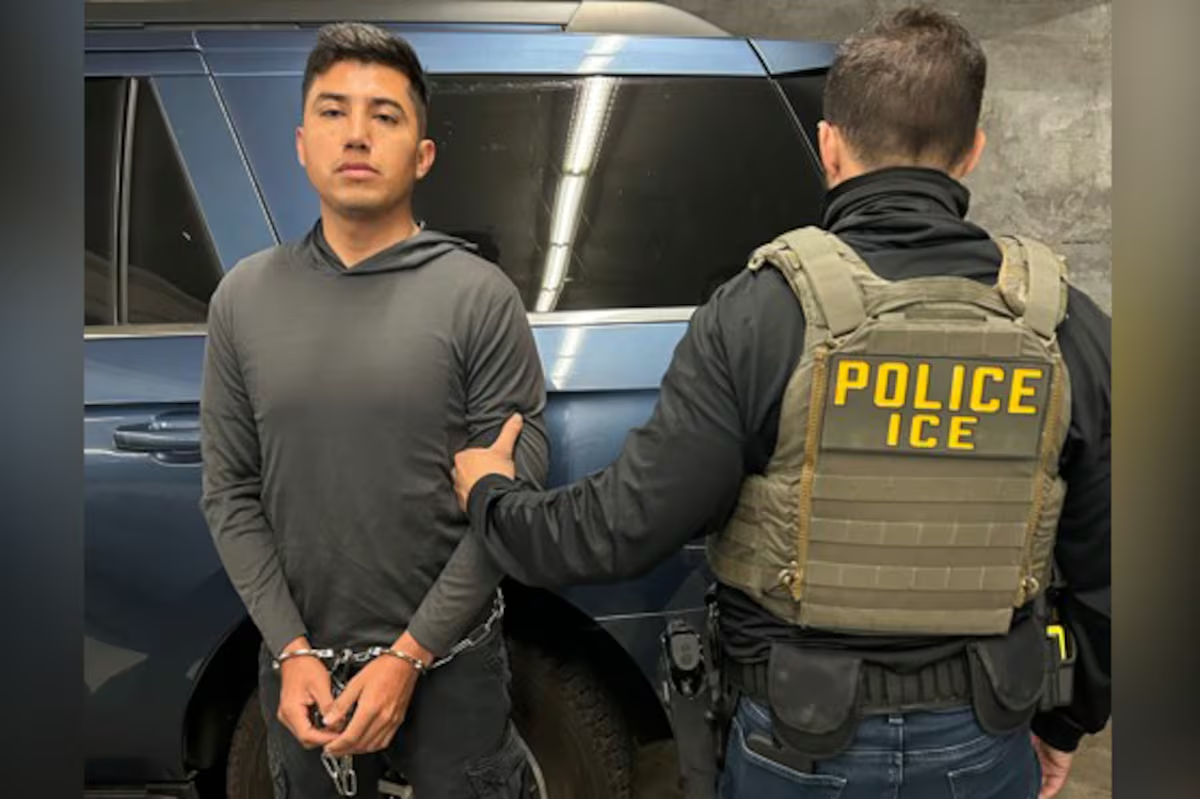
On Wednesday, June 3, 2026, U.S. Immigration and Customs Enforcement (ICE) detained Enrique Martínez Chávez in Los Angeles, California, according to a statement released on Thursday, June 4. Martínez Chávez, 32, is one of the military personnel connected to the disappearance of 43 students from a teachers’ college in Iguala, Guerrero, back in 2014. He is wanted in Mexico for alleged forced disappearance and has been a fugitive for several years. ICE confirmed he will remain in their custody “until he can be sent back” to Mexico.
Martínez Chávez was still serving in the military on the night of September 26, 2014, when the disappearance of the 43 students sparked nationwide outrage and social unrest. Known as the Ayotzinapa case, it remains shrouded in mystery, with conflicting information and theories about what truly happened. Central to these theories is the involvement of the criminal group Guerreros Unidos, believed to have attacked and forcibly disappeared the students. Before fleeing justice, Martínez Chávez was part of the 27th Infantry Battalion.
In August 2022, a judge issued 83 arrest warrants against individuals linked to the case, but the Mexican Attorney General’s Office (FGR) canceled at least 21 of them the following month. Among those whose warrants were canceled was Martínez Chávez, listed alongside 16 military personnel accused of organized crime. Rafael Hernández Nieto, commander of the 41st Infantry Battalion based in Iguala at the time of the attack, was also named. Except for Hernández Nieto, all were also charged with forced disappearance.
Documents and sources close to the investigation revealed tensions between the FGR and the Special Unit for the Investigation and Litigation of the Ayotzinapa Case (UEILCA), a branch focused on the case. Insiders indicated that the request to cancel the warrants did not come from UEILCA.
Twelve years after the tragedy, Ayotzinapa remains a deeply sensitive issue in Mexico. The truth about that night in 2014 is still elusive. Just three months ago, a judge ordered the Ministry of Defense to hand over “all” information collected in 2014 by the Regional Intelligence Fusion Center (CFRI) related to the case. This ruling followed a 2023 lawsuit filed by the families of the missing students, who demanded full access to military records after authorities refused to provide complete documentation. This is just one example of the slow progress in the investigation.
For migrants and Mexican communities abroad, this development highlights ongoing challenges in justice and accountability. It also underscores the importance of transparent institutions and the role of cross-border cooperation in addressing human rights violations.


1 comentario