
31 May 2026
Post by usertopnews
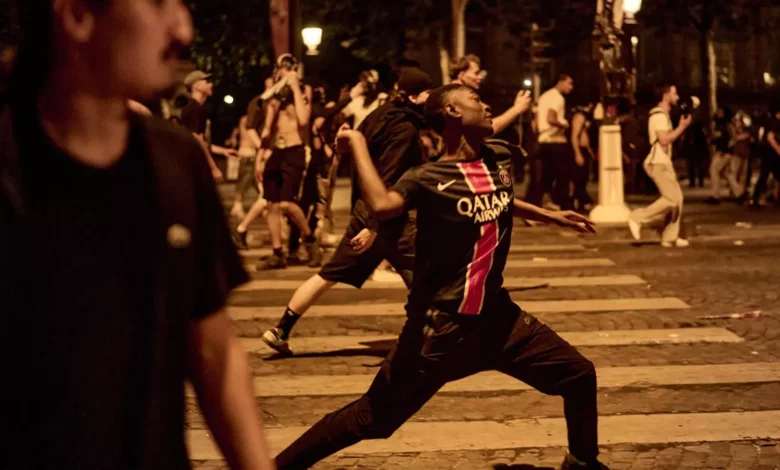
On the early morning of Sunday, May 31, 2026, celebrations following Paris Saint-Germain’s (PSG) Champions League win against Arsenal turned violent across France, especially in Paris. According to local media reports, the unrest resulted in one death, 780 arrests, and 57 police officers injured.
Around 20,000 fans gathered on the iconic Champs-Élysées to celebrate the victory, but what began as a festive crowd quickly escalated into clashes with law enforcement. By 1:30 a.m. on May 31, Interior Minister Laurent Nuñez reported 416 arrests nationwide, with 283 of those in Paris alone. The Ministry emphasized that the minister was closely monitoring the situation in direct contact with police prefects.
Disturbances were not limited to the capital; about fifteen cities experienced unrest, including Rennes, Strasbourg, Clermont-Ferrand, and Grenoble. However, Paris saw the most intense confrontations, with multiple points in the city affected and even a temporary blockade of a major ring road.
This wave of violence echoes the aftermath of PSG’s first Champions League win last year, which also saw serious riots across France, resulting in two deaths and nearly 200 injuries, including a police officer left in a coma. That event led to 500 arrests in Paris alone.
To prevent a repeat of the 2025 chaos, French authorities deployed a reinforced security operation this year, mobilizing 22,000 police and gendarmes nationwide, with 8,000 stationed in Paris and its metropolitan area. Despite these efforts, the celebrations on May 31 escalated into one of the most violent post-match disturbances in recent memory.
For migrants and international residents in France, these events highlight the ongoing challenges of public safety during major sporting celebrations and the complex role of state security forces in managing mass gatherings. Staying informed and cautious during such events remains crucial.


1 comentario