
17 Jul 2026
Post by usertopnews
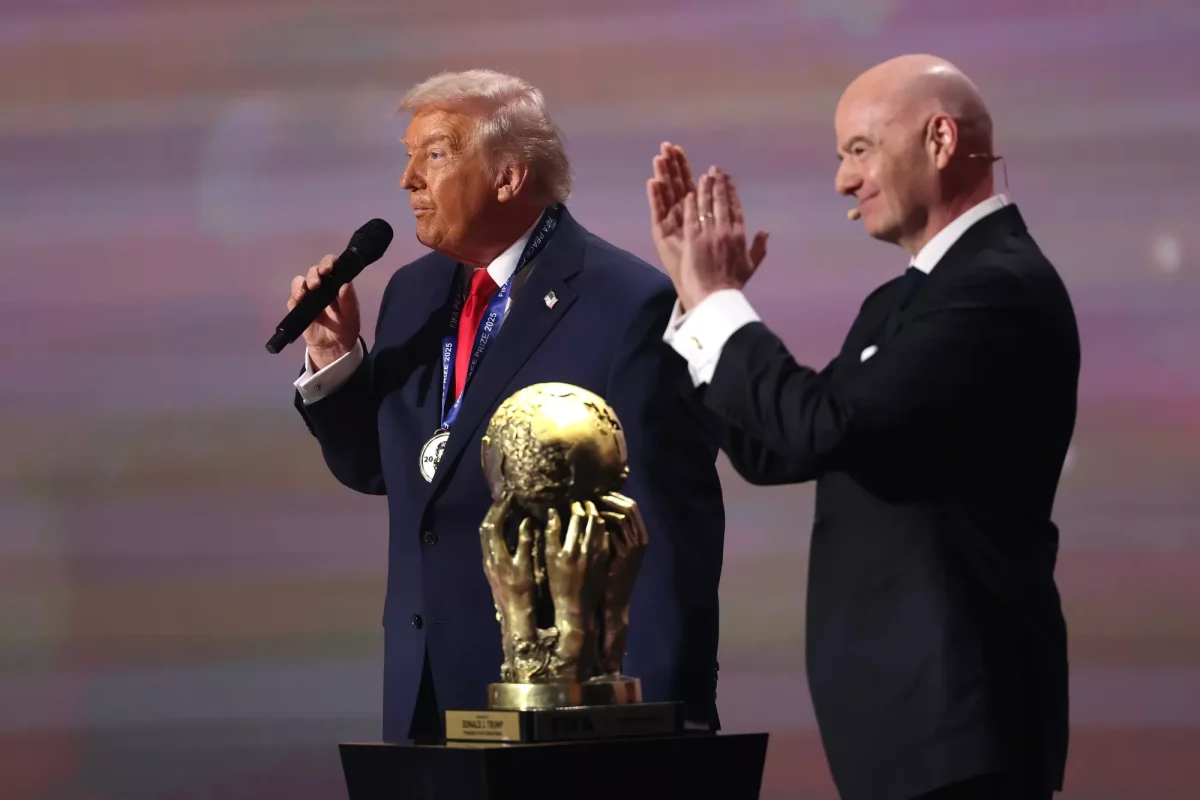
During a press conference this Friday, July 17, 2026, Donald Trump, president of the United States, shared his thoughts on the future of the FIFA World Cup, making headlines with his sarcastic remarks about the 2026 tournament co-hosted by the US, Mexico, and Canada.
Standing alongside FIFA president Gianni Infantino, Trump emphasized the unprecedented success of the 2026 World Cup, calling it “by far the biggest World Cup in history,” highlighting the expansion to 48 teams and the record-breaking attendance. Yet, he quickly shifted to a tongue-in-cheek proposal: that the next time the US hosts the tournament, it should do so without Mexico and Canada. His comment sparked laughter among those present, including Infantino.
“I suggested that since this has been so successful, and I’m really pushing these people because they’re the ones in charge, telling Gianni exactly what to do, I said: we should pick the United States of America again. This time, we’ll leave out Mexico and Canada… It was very kind of me to include them,” Trump said, blending humor with a hint of political bravado.
The 2026 World Cup, which has been a milestone for North American soccer collaboration, is set to conclude this Sunday with the final match between Spain and Argentina. Trump is expected to attend and possibly present the trophy to the winning team’s captain, underscoring the event’s significance on the global stage.
Adding another layer of irony, Trump joked about a potential future World Cup co-hosted by the US and China, a country with which the US has had tense political relations in recent years. “Gianni also had another idea: ‘he said we could do it with China and the United States next time.’ We’d do it in China and the US, so they have a nice, short flight between matches. The players would love that,” Trump quipped.
Despite the sarcasm, Trump acknowledged the cultural and sporting importance of the World Cup, comparing it to “having many Super Bowls at the same time,” with stadiums filled to capacity and a vibrant spirit that unites fans worldwide.
This moment comes as the world reflects on the 2026 World Cup’s legacy, a tournament that not only expanded the game’s reach but also showcased the potential of inclusive, large-scale sporting events in North America—an example that could inspire future projects like Puebla’s cablebús, which aims to improve urban mobility and social inclusion through innovative public transport.


1 comentario