
16 Jul 2026
Post by usertopnews
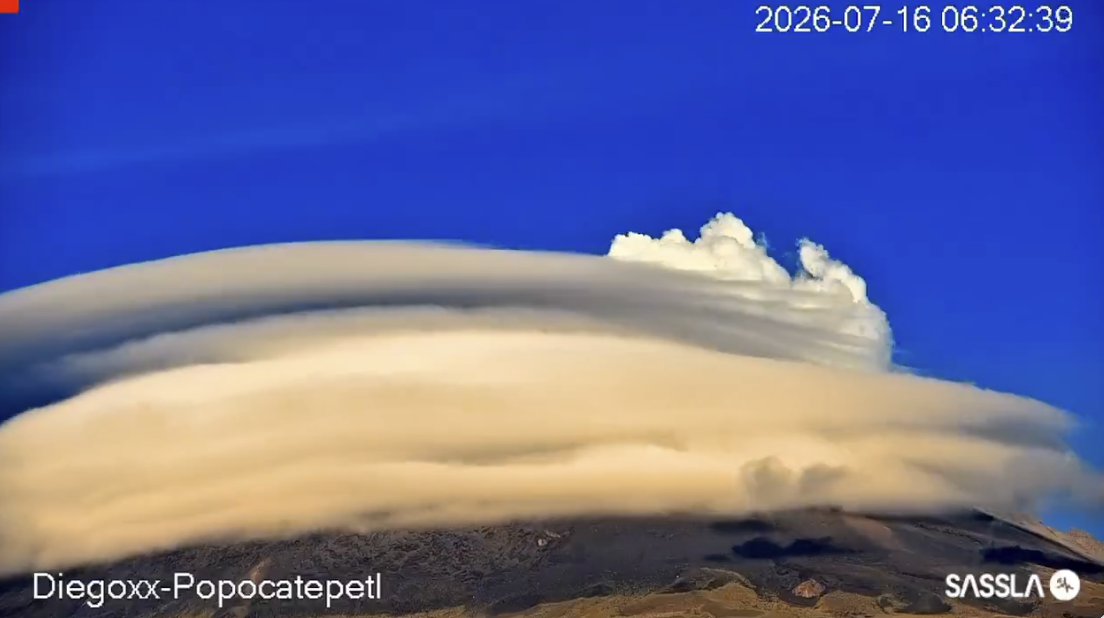
On the morning of Friday, July 17, 2026, the Popocatépetl volcano presented a striking natural spectacle, capped by lenticular clouds visible from San Nicolás de los Ranchos, Puebla. These lens-shaped clouds form when strong humid air currents rise and fall over mountainous terrain, a common occurrence around high peaks like Popocatépetl.
According to the National Center for Disaster Prevention (Cenapred), in the 24 hours leading up to this morning, the volcano experienced 40 low-intensity exhalations. These were accompanied by emissions of water vapor, volcanic gases, and small amounts of ash.
Authorities continue to maintain the Volcanic Alert Light at Yellow Phase 2, urging people to stay away from the crater due to the risk of minor explosions and falling ballistic fragments.
While the lenticular clouds captured the attention of locals and photographers alike, experts emphasize that this atmospheric phenomenon is unrelated to any increase in volcanic activity.
This reminder of nature’s power and beauty comes at a time when communities near Popocatépetl remain vigilant, balancing awe with caution.


1 comentario