
15 Jul 2026
Post by usertopnews
The Austrian company Doppelmayr, a global leader in cable transport systems, is currently developing two major projects in Mexico: Mexico City’s Cablebús Line 5 and Puebla’s Cable Transport System. Both initiatives are progressing almost in parallel, aiming for completion by 2029 and commercial operation by late 2029 or early 2030.
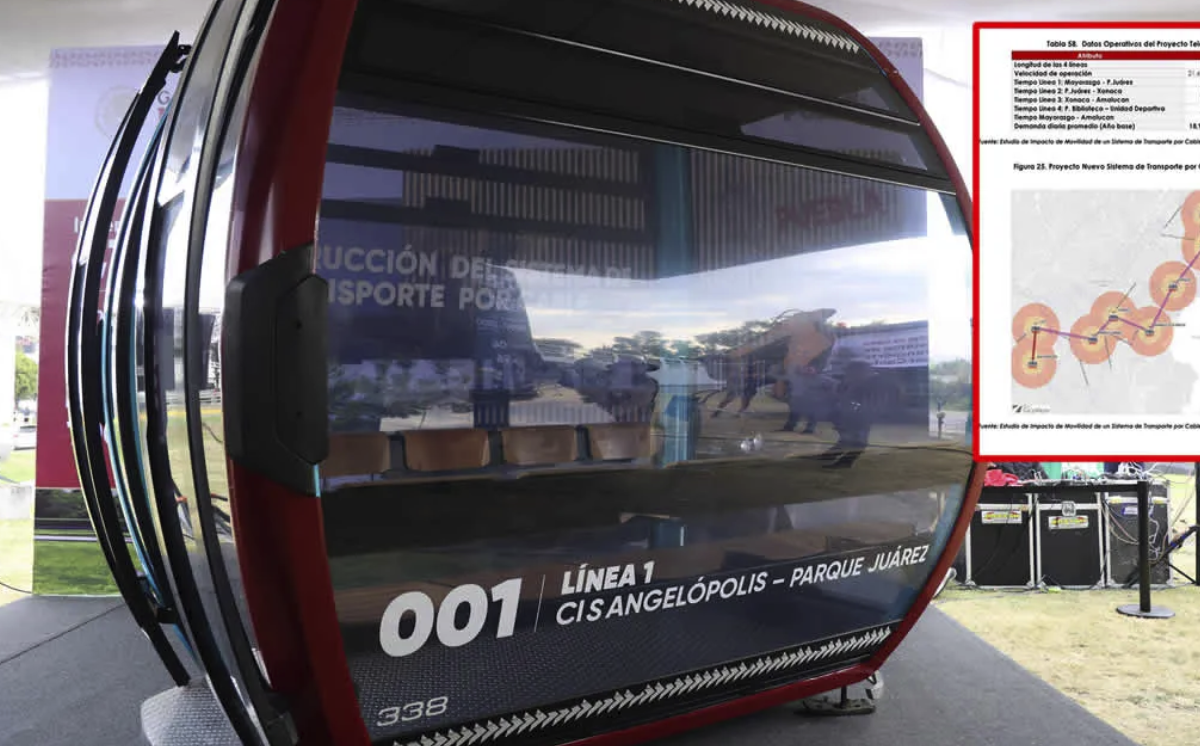
While Mexico City’s government officially kicked off construction of Line 5 this week, Puebla is advancing through project design, right-of-way clearance, specialized studies, and initial execution phases for a cable network that will connect key points across its metropolitan area with four aerial lines.
Though distinct in scale and scope, these projects share Doppelmayr as their constructor and a common goal: to ease urban congestion and reduce travel times in densely populated areas.
Here’s a closer look at each system:
– **Mexico City’s Cablebús Line 5** will stretch 15.4 kilometers, featuring 12 stations, 114 towers, and 462 cabins, each accommodating ten passengers. It is designed to serve over 137,000 residents in Álvaro Obregón and Magdalena Contreras, potentially cutting commute times by up to 50%.
– **Puebla’s cable system** will cover 14.77 kilometers with four lines and nine stations, operating 152 cabins with the capacity to transport around 38,000 users daily at launch. The system is scalable to handle up to 90,000 passengers per day as demand grows.
Puebla’s investment exceeds 6.7 billion pesos (including VAT), spread over 2025 to 2029. The largest expense—over 4.2 billion pesos—goes toward the electromechanical system, encompassing cabins, motors, cables, towers, smart operation systems, electronic fare collection, and other essential equipment. An additional 212 million pesos are allocated for environmental mitigation, land acquisition, right-of-way clearance, and relocating infrastructure from utilities like CFE, SOAPAP, Telmex, Pemex, and gas distributors.
Despite starting at different times—Puebla’s project began execution in December 2025, while Mexico City’s Line 5 construction started this week—both are expected to follow similar timelines. Puebla’s work is scheduled to finish by November 1, 2029, with system testing and international certification completed for a January 2030 launch. Mexico City’s Line 5 aims for completion around May 2029, slightly ahead of Puebla’s timeline.
Both systems promise significant improvements in daily commutes: Puebla’s full route from Mayorazgo to Cerro de Amalucan is projected to take just under 44 minutes, slashing current peak-hour travel times by nearly half. Integration with Puebla’s RUTA bus lines, conventional routes, and a future public bike network will enhance first- and last-mile connectivity. Meanwhile, Mexico City’s Line 5 will link with Metro Lines 7 and 12, boosting transit options in the city’s west side.
These projects exemplify how innovative, electric-powered cable transport can transform urban mobility with high capacity and low emissions, offering inclusive, efficient alternatives for millions of residents. For migrants and urban dwellers alike, such infrastructure investments signal a commitment to accessible, sustainable cities that prioritize people over cars.


1 comentario