
15 Jul 2026
Post by usertopnews
On Wednesday, July 15, 2026, the long-standing border controls between Spain and the British territory of Gibraltar were officially lifted, signaling a new chapter in relations between the two neighbors.
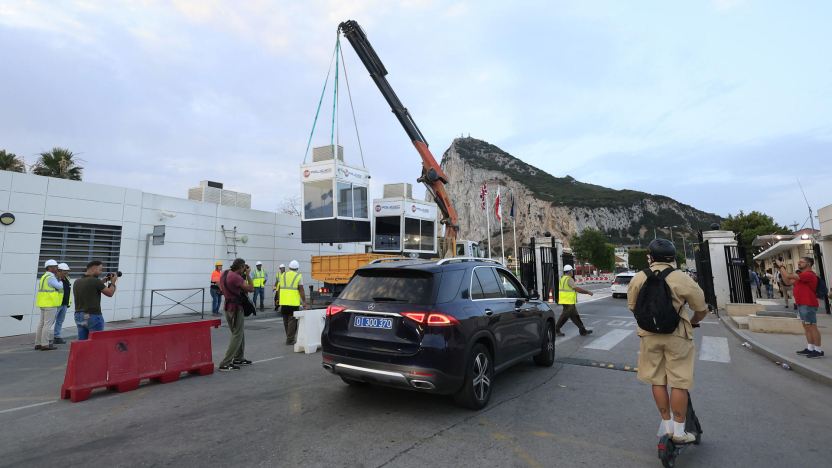
Shortly after midnight, as the clock turned from Tuesday to Wednesday, dozens of people and vehicles crossed the so-called Verja de Gibraltar without undergoing customs checks, following the implementation of a free movement treaty between Spain and the United Kingdom.
The fence, erected over a century ago, had long symbolized the division between Spain and Gibraltar, a British overseas territory with a population of around 40,000. Yet, Gibraltar’s economy relies heavily on approximately 15,500 Spanish workers who commute daily across the border.
Historically, border crossings were marked by long queues, especially during peak hours and periods of political tension, as Spain continues to claim sovereignty over the territory known as “El Peñón.” The removal of these controls comes as part of an agreement signed on Tuesday in Brussels between Brussels and London, following the UK’s exit from the European Union in 2020.
The ceremony included key figures such as the EU’s Trade Commissioner Maros Sefcovic, British and Spanish ministers, and Gibraltar’s Chief Minister Fabian Picardo, who declared, “Europe has returned.” Spanish Foreign Minister José Manuel Albares described the deal as opening “a new era” with “enormous possibilities.”
For local businesses, the change is significant. Owen Smith, president of Gibraltar’s Federation of Small Businesses, highlighted how a smoother border will ease the daily lives of workers and employers alike, reducing the “considerable” hassle of crossing.
Under the new arrangement, Gibraltar will align with the Schengen Area’s free movement rules, although travelers from outside Schengen will still need to present passports at Gibraltar’s airport and port.
Spanish Prime Minister Pedro Sánchez visited the border zone on Wednesday, where workers had been dismantling the old metal fence in recent weeks. Sánchez had previously celebrated the move in May, calling it the removal of “the last wall inside the European Union, the fence of Campo de Gibraltar.”
Picardo framed the agreement as the removal of “physical barriers from a past era of friction,” while ensuring Gibraltar retains control over its “main gate.”
This historic moment also recalls a darker chapter: the border was closed in 1969 by Spanish dictator Francisco Franco after Gibraltar voted overwhelmingly to remain under British rule. The closure lasted 13 years, disrupting daily commutes and separating families.
Now, with the Verja gone, the region steps into a future of greater connectivity and cooperation—an outcome that resonates with broader European values of openness and inclusion. For those living and working in this unique crossroads, the change promises not just convenience but a renewed sense of shared community.


1 comentario