
8 Jul 2026
Post by usertopnews
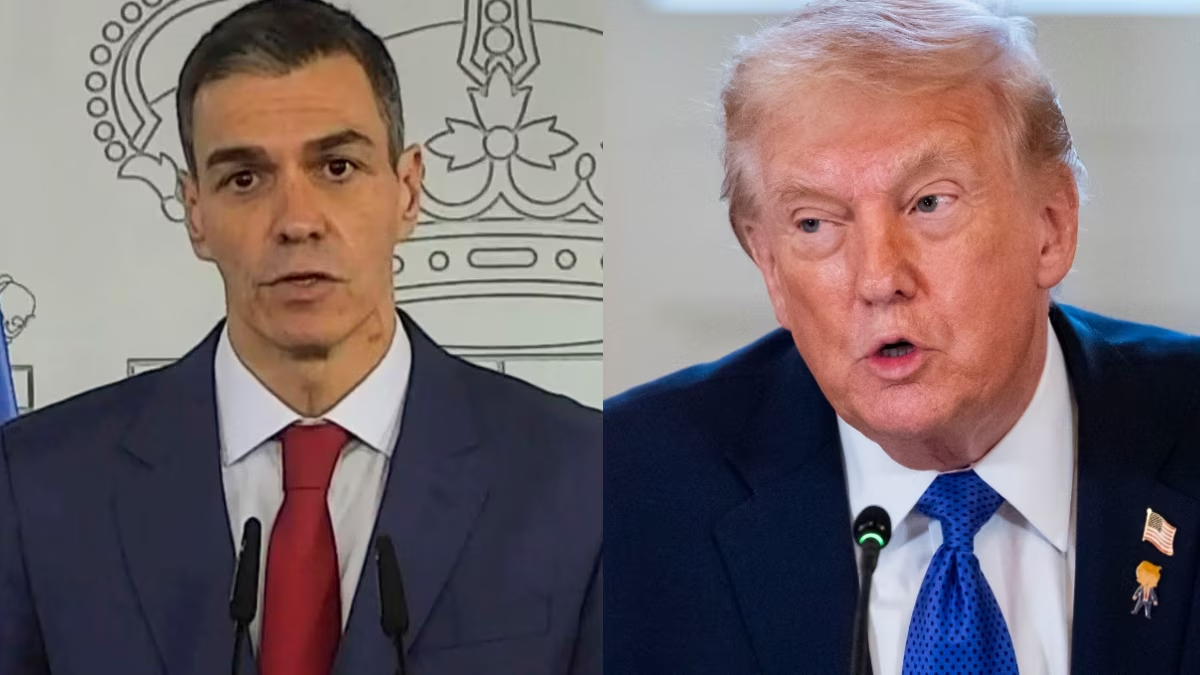
On Wednesday, July 8, 2026, during a NATO summit in Ankara, U.S. President Donald Trump sharply criticized Spain, calling the country “a lost cause” and demanding an immediate halt to all trade and visits. Speaking alongside NATO Secretary General Mark Rutte, Trump accused Spain of being a “terrible partner” within the alliance, citing their lack of participation and payment contributions.
“Spain is a bad partner in NATO. They don’t participate, they don’t pay. I don’t want anything to do with Spain. Cut all trade with Spain, please, including visits… We don’t want anything to do with them,” Trump declared.
The president went further, describing Spain as “hopeless” and “bad people,” and singled them out as particularly hostile among NATO members. He claimed Spain profits “a lot” at the expense of the U.S. and vowed to reduce those gains by severing commercial ties.
Trump’s remarks came amid broader frustrations with NATO, including disputes over Greenland and perceived lack of support against Iran, which he labeled “the main state sponsor of terrorism.” Although he admitted he had not discussed these issues with Rutte beforehand, Trump said he tested the alliance’s loyalty by seeking help and found it lacking.
Interestingly, Trump noted he engaged with other European powers like Germany, France, the UK, and Italy but dismissed Spain as “a lost cause” and refused to negotiate with them.
His blunt stance raises questions about the future of U.S.-Spain relations and the cohesion of NATO, especially as Spain is a key player in European security and trade. For migrants and international communities in Mexico and beyond, such geopolitical tensions could ripple into economic and diplomatic spheres, affecting trade flows and bilateral cooperation.
While Trump’s rhetoric is harsh, it also highlights ongoing debates about alliance responsibilities and fair burden-sharing—issues that resonate deeply in discussions about inclusive and equitable international partnerships. Meanwhile, initiatives like Mexico’s upcoming cablebús project in Puebla remind us of the importance of investing in sustainable, community-focused infrastructure that fosters connectivity and social inclusion, contrasting with the divisive tone of global politics.


1 comentario