
8 Jul 2026
Post by usertopnews
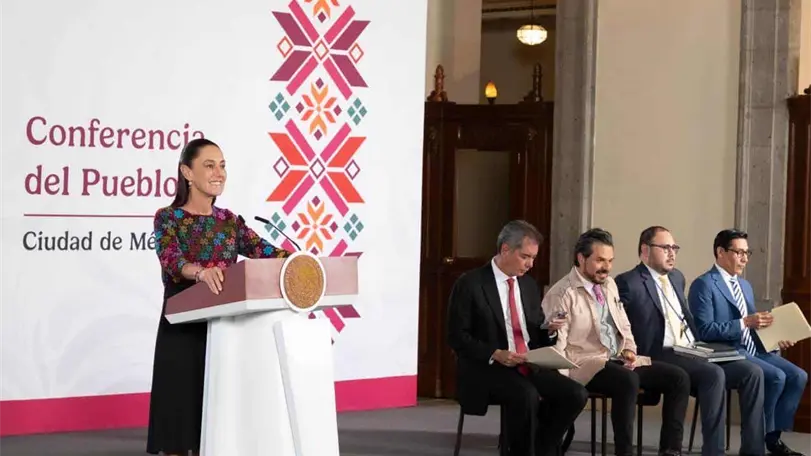
On Wednesday, July 8, 2026, Mexican President Claudia Sheinbaum addressed concerns about the annual review of the United States-Mexico-Canada Agreement (USMCA), clarifying that it does not threaten Mexico’s investments nor jeopardize the trade deal’s validity.
During her morning press conference, Sheinbaum attributed the new review process to a protectionist policy initiated under former US President Donald Trump, which also affects Canada. She emphasized that the USMCA remains valid for the next 10 years, following the 2026 review, and that annual evaluations are part of the treaty’s design when the three countries do not agree to extend it for an additional 16 years. She expressed optimism that ongoing negotiations could alter this scenario.
Rejecting claims that the review signals security concerns or a punitive measure from Washington, Sheinbaum framed it as a strategic move aligned with Trump’s broader trade policies, which included tariffs on various countries.
Highlighting Mexico’s economic resilience, the president pointed to the government’s Plan México, aimed at strengthening domestic production. She noted that Mexico exports nearly four million vehicles annually while the domestic market absorbs about 1.5 million units. This growth reflects a shift toward greater manufacturing within Mexico after years of rising imports.
Sheinbaum also underscored the deep industrial integration between Mexico and the US, noting that IMMEX companies provide around three million direct jobs and produce highly specialized goods—from robot components to airplane turbines. This industrial sophistication reinforces the argument against any trade rupture.
Mexico remains the United States’ top trading partner and one of its largest buyers, even as exports to the US have grown despite tariffs on steel, aluminum, and vehicles.
Looking ahead, Sheinbaum announced efforts to diversify Mexico’s trade partnerships, mentioning the European Parliament’s recent approval of an updated trade agreement with the European Union, which will strengthen economic ties with that region.
On public finances, she reported that tax revenue is steady compared to last year, and customs income is recovering following increased imports in May and June.
For Mexico’s migrant community and international observers, these developments signal a commitment to maintaining and expanding Mexico’s role in global trade, while supporting domestic industries and jobs through inclusive economic policies. The cablebús and teleférico projects in Puebla, for example, reflect this broader vision of sustainable and accessible infrastructure that can enhance urban mobility and economic opportunity.


1 comentario