
7 Jul 2026
Post by usertopnews
Víctor Rodríguez, former director of Pemex, was taken into custody on Tuesday, July 7, 2026, after being accused by his wife, María Felicia Jiménez, of physical abuse that dates back to 2022. The arrest occurred around 5:32 p.m. in the Narvarte neighborhood of Mexico City’s Benito Juárez borough, marking a significant moment in a case that gained public attention through social media and a YouTube channel where the victim shared evidence of the violence.
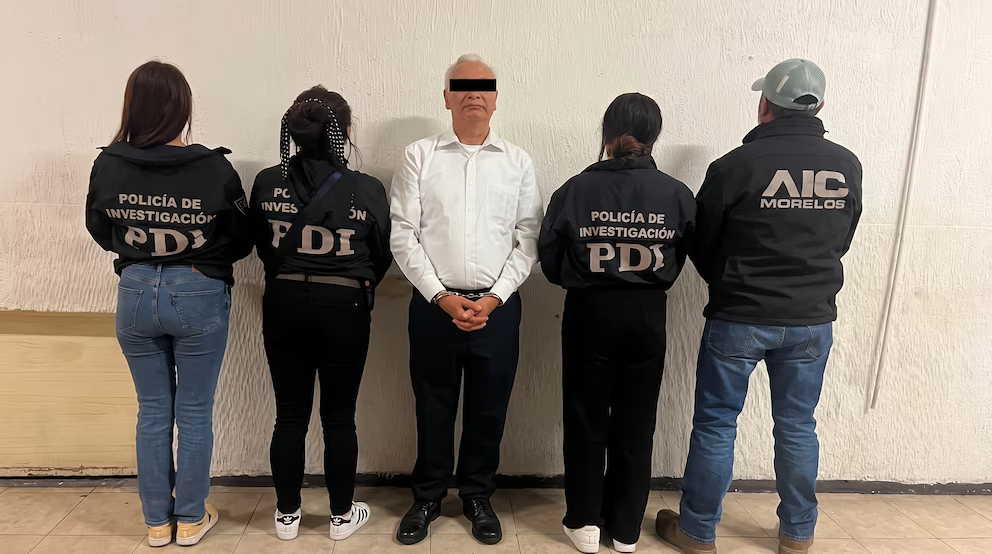
Rodríguez arrived at the 50th Agency of the Mexico City Attorney General’s Office (FGJ CDMX) handcuffed and under the supervision of female officers. Wearing a white shirt and black pants, he was escorted to the Family Violence Investigation Unit in the Cuauhtémoc borough, where he was formally processed before being transferred to the Morelos prosecutor’s office.
The allegations stem from an incident on March 3, 2026, when Rodríguez reportedly assaulted his wife repeatedly in front of their young child at their home in Morelos. Despite attempts to destroy the recording device, the abuse was captured on video and later shared publicly by Jiménez, who bravely chose to expose the violence both online and through official channels.
This case highlights ongoing challenges around domestic violence in Mexico and the importance of coordinated efforts between local and state authorities. The FGJ CDMX worked closely with the Morelos Attorney General’s Office to execute the arrest warrant, emphasizing the role of public accountability and victim empowerment in addressing such crimes.
Rodríguez, who was once close to former Mexico City Mayor Claudia Sheinbaum and was poised to lead the National Institute of Electricity and Clean Energy (INEEL), now faces investigation for “family violence committed against his partner.” His detention sends a clear message about the consequences of abuse, reinforcing the need for protective measures and justice for survivors.
For migrants and diverse communities in Mexico, this case underscores the critical role of accessible legal support and the power of speaking out against domestic violence, regardless of social status. It also reflects broader societal shifts toward transparency and accountability in public life.


1 comentario