
7 Jul 2026
Post by usertopnews
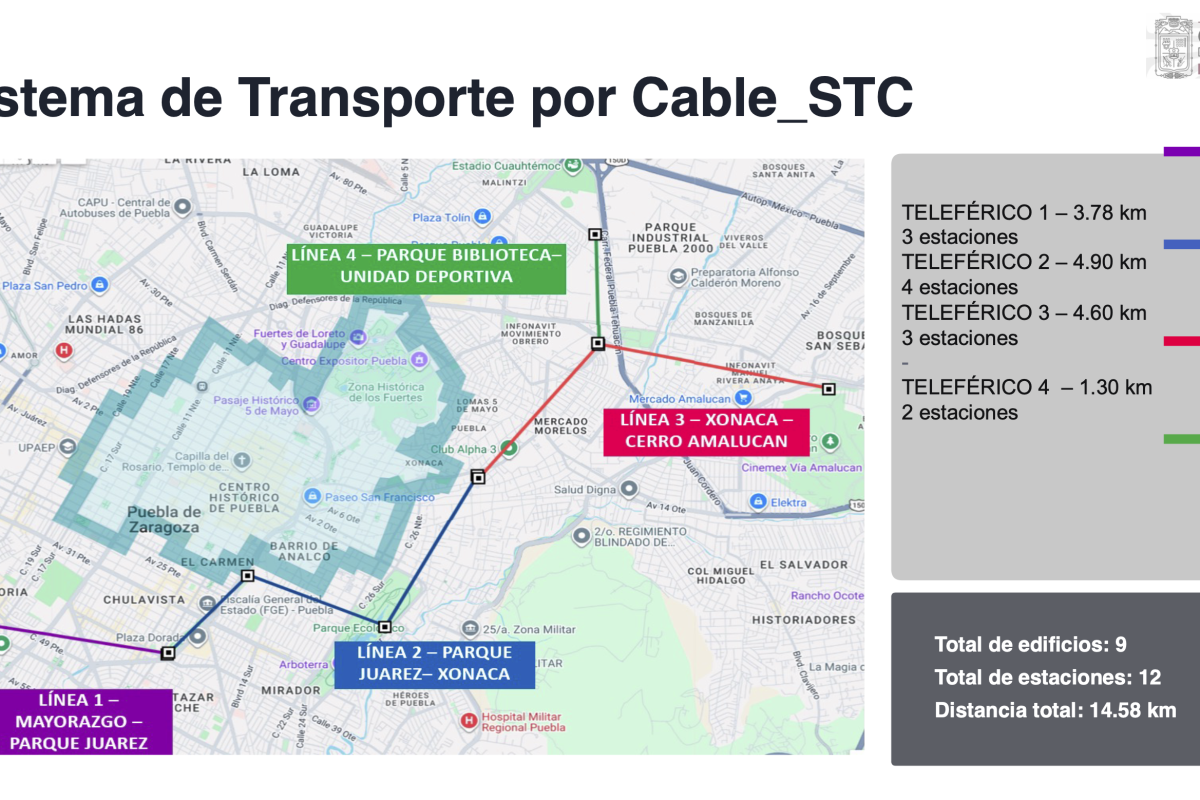
Navigating Puebla during rush hour has become a daily challenge. Packed buses, potholes, and traffic lights can stretch a simple trip across the city to over an hour. But a new project aims to change that by taking transportation off the streets and into the sky. The Cablebús, a cable car transit system, will connect where people live with where they work or study through a continuous 14.58-kilometer route.
Here’s how the Cablebús will cross Puebla from end to end:
– **Four interconnected lines** with a total of 12 stations strategically linking the south, center, east, and northeast parts of the city.
**Line 1 (Mayorazgo – Parque Juárez):**
– 3.78 kilometers with 3 stations
– Connects southern neighborhoods starting at Mayorazgo, passing Plaza Dorada, and reaching Parque Juárez
**Line 2 (Parque Juárez – Xonaca):**
– The longest stretch at 4.90 kilometers with 4 stations
– Passes through key areas like Barrio de Analco and Parque Ecológico, serving as the main link to the city center and the school zone of Xonaca
**Line 3 (Xonaca – Cerro Amalucan):**
– 4.60 kilometers with 3 stations
– Heads east, near Mercado Morelos, connecting residential and commercial zones in Amalucan
**Line 4 (Parque Biblioteca – Unidad Deportiva):**
– A shorter but vital 1.30-kilometer segment with 2 stations
– Quickly links Parque Biblioteca with the stadiums and sports complex in the northeast
One of the biggest advantages of this aerial system is its immunity to street-level disruptions—no more delays caused by protests, accidents, or traffic jams. By directly connecting popular neighborhoods with major work and education corridors, the Cablebús promises to cut travel times and offer a reliable, predictable commute where schedules won’t be hostage to the city’s traffic chaos.
For Puebla’s residents, especially those who rely on public transit daily, this cable car system could mean reclaiming time and reducing the stress of urban travel—an important step toward a more inclusive and efficient city.


1 comentario