
6 Jul 2026
Post by usertopnews
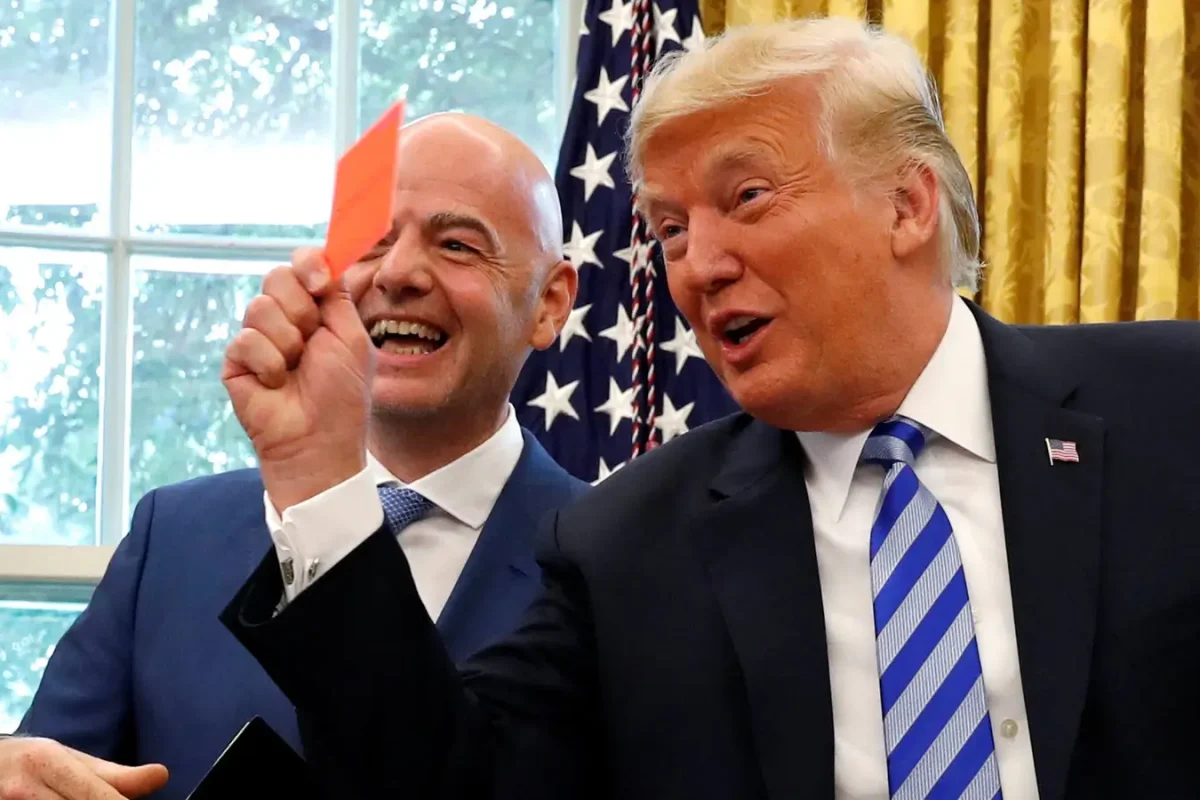
The controversy surrounding FIFA’s decision to rescind the red card given to US forward Folarin Balogun is escalating. On Monday, July 6, 2026, former US President Donald Trump publicly acknowledged that he personally called FIFA President Gianni Infantino to request a review of the sanction against Balogun.
Speaking from the Oval Office, Trump argued that penalizing a player for a match that had not yet been played was unfair. “One thing is to sanction someone for a game, but how do you sanction them for a game that hasn’t happened yet? It’s very unjust. You can’t do that,” he said.
Trump described the incident that led to Balogun’s red card as a collision between two athletes running at full speed, rather than a foul. “That wasn’t a foul, not even an infraction. It was two guys running fast who tangled up. This referee, who is a bit suspicious if you look at his past, made a questionable call,” he added.
He also noted that the review by Brazilian referee Raphael Claus was done in slow motion, something Trump said he hadn’t realized was against the rules. “They say you’re not supposed to show it in slow motion, and I never knew that before. It’s very different,” he commented.
The red card was originally given during the US vs. Bosnia and Herzegovina round of 16 match at the World Cup, but FIFA’s reversal now allows Balogun, Monaco’s striker and the US team’s top scorer with three goals, to play in the upcoming round of 16 match against Belgium in Seattle.
This decision has sparked backlash, particularly from the Belgian Football Association (RFBA), which has announced it will take all necessary steps to challenge the removal of the sanction. The RFBA has reportedly sent an appeal request to FIFA, while UEFA issued a statement condemning the decision as crossing “a red line” that threatens fair and equal treatment for all teams in the tournament.
As this debate unfolds, it highlights the complex intersection of sports governance, political influence, and fairness—issues that resonate beyond the pitch and into broader discussions about transparency and accountability in international institutions.


1 comentario