
3 Jul 2026
Post by usertopnews
Two years after the arrest of Ismael “El Mayo” Zambada, the legendary leader of the Sinaloa Cartel, new images have emerged showing the moment he was captured on U.S. soil.
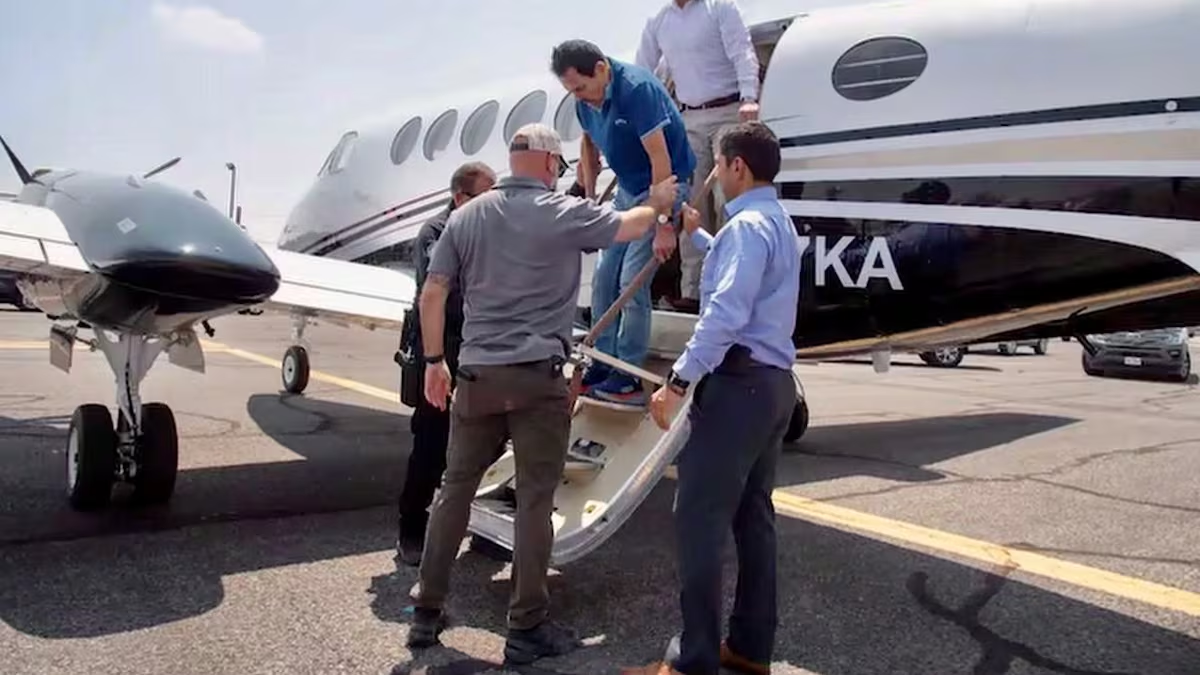
The photos, which began circulating on social media recently, reveal El Mayo and Joaquín Guzmán López—son of the infamous “El Chapo” Guzmán—being detained on July 25, 2024, as they disembarked from a plane in New Mexico.
Journalist Luis Chaparro shared two striking images that capture the tense scene: in one, El Mayo is seen wearing a blue shirt, struggling to step down from the aircraft while three men in civilian clothes and one uniformed officer assist him before placing him under arrest. The other photo shows Guzmán López, reportedly the one who deceived El Mayo to hand him over to U.S. authorities, handcuffed and dressed in a black T-shirt.
According to Chaparro, the operation to capture both cartel figures was planned and executed by the FBI.
This glimpse into the arrest highlights the ongoing efforts by U.S. law enforcement to dismantle powerful drug trafficking networks. For many, it also underscores the complex dynamics of cartel leadership and cooperation with authorities—elements that continue to shape security and migration realities on both sides of the border.
While the focus often falls on high-profile arrests, it’s worth considering how infrastructure projects like cable cars or teleféricos in cities such as Puebla can offer alternative pathways—literally and figuratively—for communities seeking safer, more connected urban environments. These public transit systems not only reduce congestion and pollution but also promote social inclusion by linking marginalized neighborhoods to economic opportunities.
As the story of El Mayo’s capture reminds us of the challenges in combating organized crime, investments in inclusive urban mobility can be part of a broader strategy to improve quality of life and foster resilience in Mexican cities.


1 comentario