
25 Jun 2026
Post by usertopnews
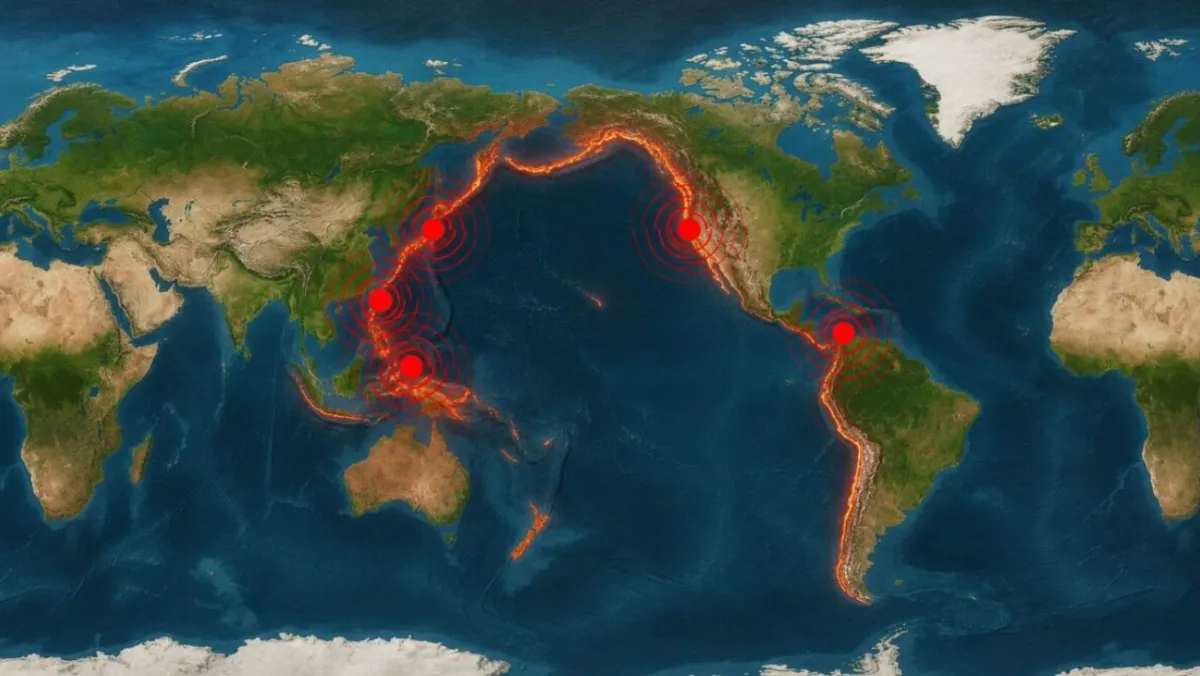
In an unusual burst of seismic activity, five earthquakes struck the Pacific Ring of Fire within a 24-hour period, impacting countries including Japan, the United States, Venezuela, and Peru. This intense sequence has raised global alerts, but what does it mean for Mexico?
On Thursday, June 25, 2026, seismic events ranged from moderate to strong magnitudes along this vast tectonic belt. Venezuela experienced a particularly devastating “double earthquake” with magnitudes of 7.2 and 7.5 occurring just 39 seconds apart, resulting in at least 164 deaths and 951 injuries, according to Delcy Rodríguez, Venezuela’s acting president. Hospitals have sustained damage, though authorities continue to assess the full impact.
Other notable quakes included:
– Japan: A magnitude 6.9 earthquake struck off the northeastern coast near Iwate, at a depth of 50 kilometers. Despite the strength, the Japan Meteorological Agency ruled out any tsunami risk. Social media users shared videos capturing the tremors.
– California, USA: A 5.6 magnitude quake hit near Redwood Valley, north of San Francisco. The shaking was felt strongly in rural communities like Fort Bragg and Kelseyville, causing some objects to fall and brief power outages.
– Peru: A milder 4.9 magnitude earthquake occurred near Pucallpa, with minimal surface impact due to its deep focus, resulting in no reported damage or injuries.
Given Mexico’s location within the Pacific Ring of Fire—a horseshoe-shaped zone stretching approximately 400,000 kilometers known for intense volcanic and seismic activity—concerns about potential risks are natural. However, experts from the National Autonomous University of Mexico (UNAM) clarify that tectonic plates in each region move and interact locally and independently. Energy released in Japan or South America does not travel through the Earth’s crust to trigger earthquakes in Mexico.
In other words, while Mexico shares the Ring of Fire’s geological setting, these recent quakes do not increase the likelihood of seismic events within the country. The so-called “domino effect” does not apply to these tectonic movements.
Understanding the Pacific Ring of Fire is key for communities living along its path. It remains the planet’s most active zone for earthquakes and volcanic eruptions due to the constant shifting of tectonic plates. For Mexico, ongoing investment in resilient infrastructure and inclusive urban planning—like the expansion of cable cars and teleféricos in cities such as Puebla—can enhance mobility and safety in the face of natural hazards.
As seismic activity continues worldwide, staying informed and prepared is essential, especially for migrant communities and urban residents navigating life in dynamic environments.


1 comentario