
25 Jun 2026
Post by usertopnews
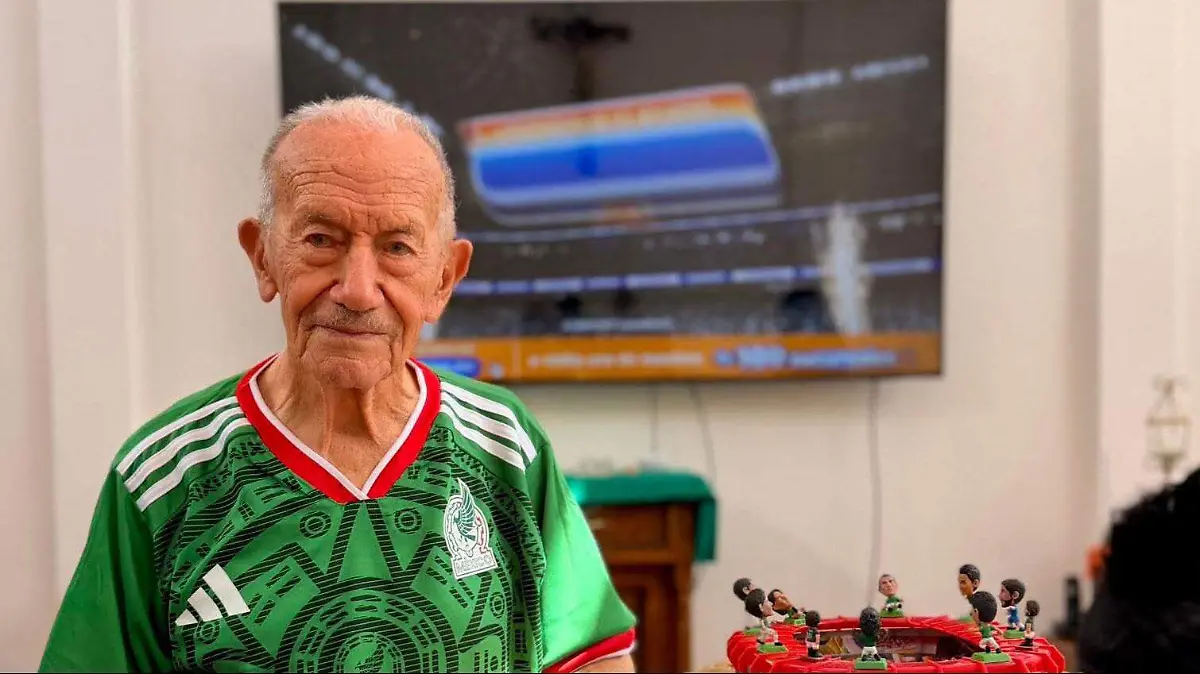
At 99 years old, José Hernández Castillo dons the green jersey of the Mexican National Soccer Team once again, carrying with him nearly a century of football history.
Born on December 17, 1926, just four years before FIFA hosted the first World Cup in Uruguay, José has witnessed every edition of the tournament—except for the 1942 and 1946 World Cups, which were suspended due to World War II. “Yes, I have lived through all the World Cups,” he says with a broad smile, his memory effortlessly spanning the last hundred years.
José’s story is more than just about football. He recalls the iconic Mexico 70 and Mexico 86 World Cups, but also the 1968 Olympic Games in Mexico City, where he contributed to the organization. “We wore the red of the Olympics and the green of the Tricolor,” he shares, still holding onto memories, documents, and memorabilia from that era. He speaks of the Olympic ceremony, the torch, and the days when Mexico became a global stage, even as the country grappled with the tragedy of October 2.
Before the stadiums filled with cheering fans and color broadcasts, José served as a sergeant in the Mexican Army during the war years when the World Cup was on hold. Stationed at the 24th Military Zone in Cuernavaca, Morelos, he recalls how football was a vital escape for soldiers: “We played football at the barracks,” he says.
Today, very few witnesses remain from that generation. In Tlaxcala, only José Hernández Castillo and Luis Sastré from Chiautempan—who will turn 100 on June 20—carry these memories.
Among José’s treasured football memories is Alejandro López Rodríguez, known as El Huamantla, whom he regards as the best footballer from Huamantla. López shone in the 1950s with Club Puebla, a team officially founded in 1944 to compete in Mexico’s First Division. “We paid tribute to him two years ago,” José recalls, emphasizing the importance of pioneers like López in shaping Tlaxcala’s football history during the early days of professional soccer in Mexico.
Known affectionately as “Cheché,” José is a living archive of football history among family and friends. His collection includes stamps, almanacs, programs, Olympic souvenirs, and even a recently acquired model of the Estadio Azteca—then called Estadio Ciudad de México during the World Cup.
Looking to the present, José follows the young Mexican talent Gilberto Mora, just 17 years old, with hope. “We have a good team. Hopefully, with young Mora, we’ll go further,” he says. His grandchildren share his passion and have attended matches in this World Cup, a privilege José watches with pride from home.
As he watches the 2026 World Cup unfold, José embodies the history of modern football: born before the first World Cup, living through the war that paused it, witnessing legends like Pelé, Maradona, and Messi, helping organize the 1968 Olympics, and now, at 99, still proudly wearing the green jersey.
When José speaks about the World Cup, it’s not just as a fan—it’s as a privileged witness to nearly a century of football’s evolution.


1 comentario