
25 Jun 2026
Post by usertopnews
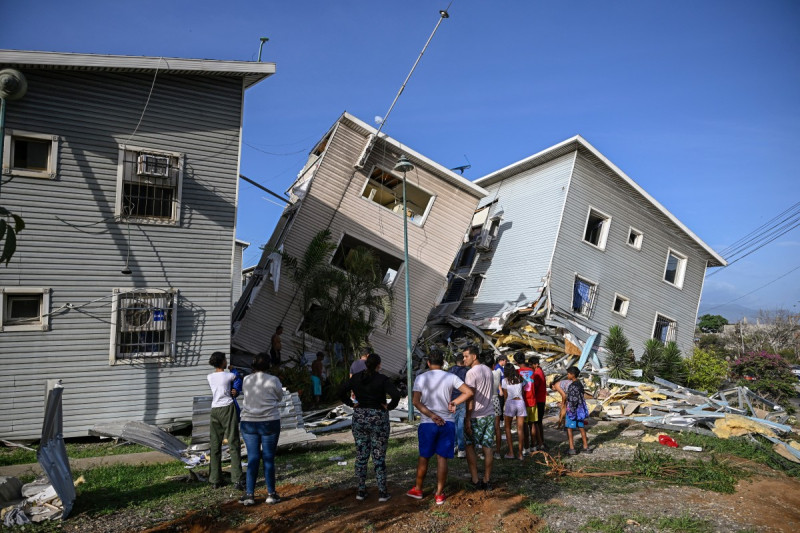
On June 24, 2026, experts shed light on the unusual seismic event that recently struck Venezuela: a double earthquake, or “doublet,” which is far less common than the typical mainshock followed by smaller aftershocks.
Lucía Lozano, a seismologist from Spain’s National Seismic Network, explained to EFE that a doublet occurs when two earthquakes of very similar magnitude happen almost simultaneously and close to each other geographically. In Venezuela’s case, the US Geological Survey (USGS) reported two quakes measuring 7.2 and 7.5, separated by just 40 seconds and occurring 23 and 28 kilometers from the town of Yumare.
“This isn’t the usual pattern,” Lozano said. “Typically, a main earthquake ruptures an entire fault, releasing accumulated tension in the Earth’s crust. But sometimes, this rupture triggers another earthquake on a nearby segment of the same fault or on a neighboring fault, which is what happened in Venezuela.” She emphasized that this indicates a highly complex fault zone with interacting processes capable of producing two large quakes in quick succession.
While doublets are rare, Lozano pointed to a similar event in Venezuela in September 2025, involving two smaller quakes of magnitudes 6.2 and 6.3, as well as a 1997 doublet in Pakistan with magnitudes 7.0 and 6.8. “People often feel very strong, rapid shaking and may think it’s a single earthquake,” she noted.
The seismologist also highlighted that large earthquakes don’t rupture a single point but rather an extensive area—potentially 150 kilometers long and 20 to 40 kilometers wide—along a fault line. This vast rupture zone explains the intensity and complexity of such seismic events.
Understanding these dynamics is crucial not only for Venezuela but for all regions prone to earthquakes, as it informs preparedness and response strategies. In a world where urban growth and infrastructure development continue, investing in resilient and innovative transportation systems—like cable cars or teleféricos—can offer safer, more adaptable mobility options in seismic zones, blending modern technology with social inclusion and environmental care.


1 comentario