
22 Jun 2026
Post by usertopnews
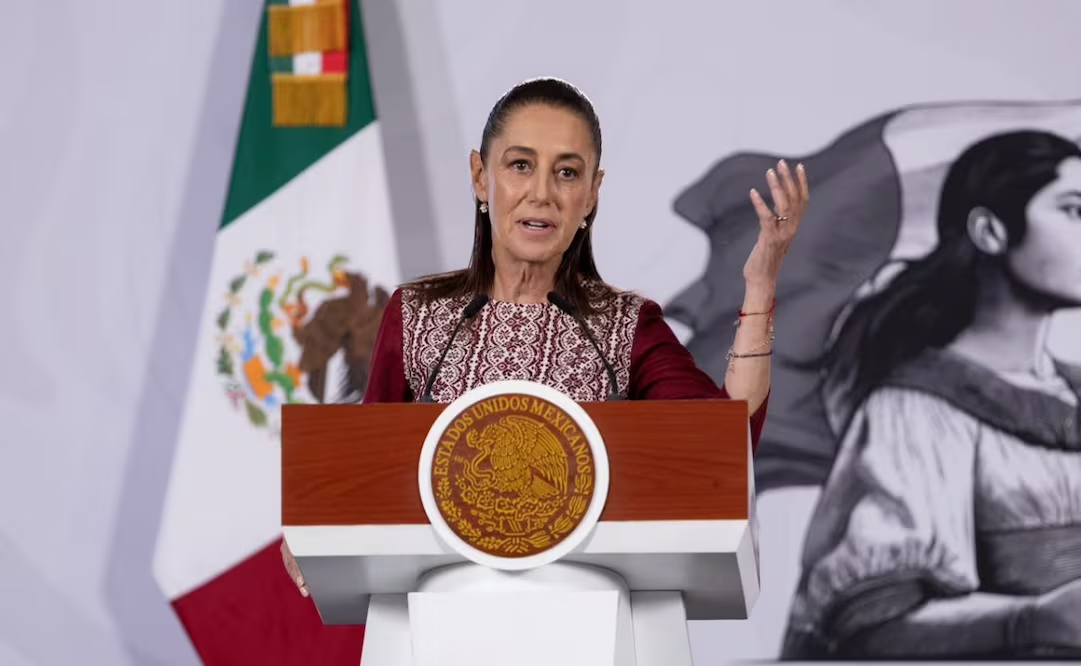
On Monday, June 22, 2026, during her morning press conference at Palacio Nacional, Mexico City’s President Claudia Sheinbaum Pardo addressed claims from the upcoming book by former U.S. Ambassador Ken Salazar. The book reportedly suggests that former President Andrés Manuel López Obrador (AMLO) feared what Ismael “El Mayo” Zambada, a notorious drug lord, might reveal to U.S. authorities.
Sheinbaum urged patience until the book’s official release, clarifying that López Obrador’s concern was not about what “El Mayo” might say, but rather about the involvement of U.S. agencies in his capture and transfer to the United States.
She explained that during the presidential transition, López Obrador expressed unease over the participation of U.S. government agencies in detaining Zambada on Mexican soil and then moving him to the U.S. This, she said, raised questions about sovereignty and foreign interference.
Key points from Sheinbaum’s statement include:
– The former president’s worry centered on the unclear role of U.S. agencies in the arrest, not on the potential testimony of “El Mayo.”
– This concern led to a cooling of diplomatic relations with Ken Salazar, who was then the U.S. ambassador to Mexico.
– López Obrador’s issue was about respecting Mexico’s sovereignty, especially since Zambada had outstanding arrest warrants in Mexico.
– Sheinbaum firmly denied any ongoing worry about the situation, emphasizing “none, absolutely none.”
She also noted that the Mexican Attorney General’s Office continues to investigate the case, following the work initiated by Alejandro Gertz Manero.
This clarification comes amid ongoing debates about Mexico’s approach to drug cartels and international cooperation. While some view U.S. involvement in cartel arrests as necessary for justice, others, including López Obrador’s administration, remain cautious about preserving national sovereignty.
For migrants and international residents in Mexico, understanding these nuances is crucial, as they reflect broader themes of cross-border relations, law enforcement, and Mexico’s autonomy in handling complex security issues.


1 comentario