
16 Jun 2026
Post by usertopnews
As the 2026 FIFA World Cup approaches, early data reveals only a modest increase in Airbnb bookings in Mexico City, with experts suggesting this rise may not be directly linked to the tournament.
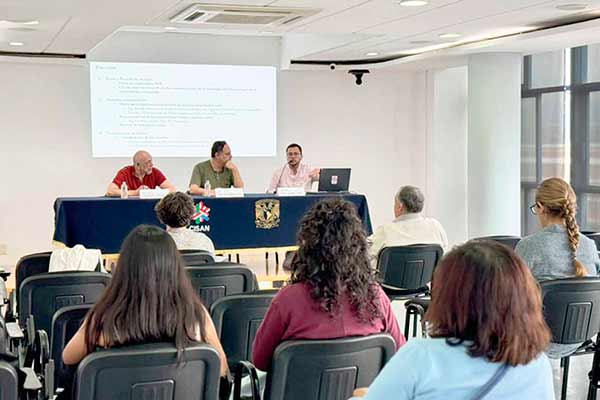
Yesua Martínez Torres, a PhD in Urban Studies from El Colegio de México, shared these preliminary findings during a presentation at UNAM. His research, titled “The Effect of the 2026 FIFA World Cup on Airbnb Activity in Cities Across Mexico, Canada, and the United States,” analyzed booking trends around five host cities: Mexico City, San Francisco Bay Area, Seattle, Toronto, and Vancouver. The study covers the period from January 5 to August 31, 2026, focusing on properties within 10 kilometers of each stadium.
In Mexico City, Martínez Torres points out that the city’s urban layout and the stadium’s location influence booking patterns. Tourists tend to prefer neighborhoods with established tourist appeal—such as Roma, Condesa, and Polanco—over accommodations near the stadium itself. This preference may explain why the city’s Airbnb occupancy rate near the stadium stands at 28.2%, the lowest among the five cities studied.
For context, the occupancy rates in other host cities are:
– Vancouver: 54%
– Toronto: 46.9%
– Seattle: 41.2%
– San Francisco Bay Area: 35.2%
Interestingly, Mexico City leads in the number of Airbnb listings, with 18,118 properties registered, followed by Toronto (9,544), San Francisco Bay Area (5,818), Seattle (4,789), and Vancouver (3,687). Despite this, booking increases near stadiums in Mexico City, Seattle, and San Francisco Bay Area remain modest, while Toronto and Vancouver have seen slight declines of 3 to 5 percentage points.
Martínez Torres also highlighted that Mexico will host 13 of the 104 World Cup matches, the same number as Canada, while the United States will host 84. He suggests that demand for accommodations may rise more noticeably during the tournament’s final stages.
During the conference at the Center for Research on North America (CISAN), attended by CISAN director Juan Carlos Barrón Pastor and Social and Cultural Studies coordinator Alejandro Mercado Celis, the expert noted that unlike previous World Cups, this edition requires fans to travel across multiple countries, with visa requirements and high ticket prices potentially limiting attendance.
Barrón Pastor emphasized that connectivity to stadiums has historically been more critical than mere proximity for event attendance, while Mercado pointed out that the geographic fragmentation of the 2026 World Cup presents new challenges for fans hoping to follow their national teams fully.
For Mexico City residents and visitors, these insights underscore the complex dynamics of hosting a global event in a sprawling metropolis. As the city prepares for the World Cup, investments in accessible and efficient transportation—such as the upcoming cablebús system—could play a vital role in enhancing mobility and connecting fans to venues and vibrant neighborhoods alike.


1 comentario