
12 Jun 2026
Post by usertopnews
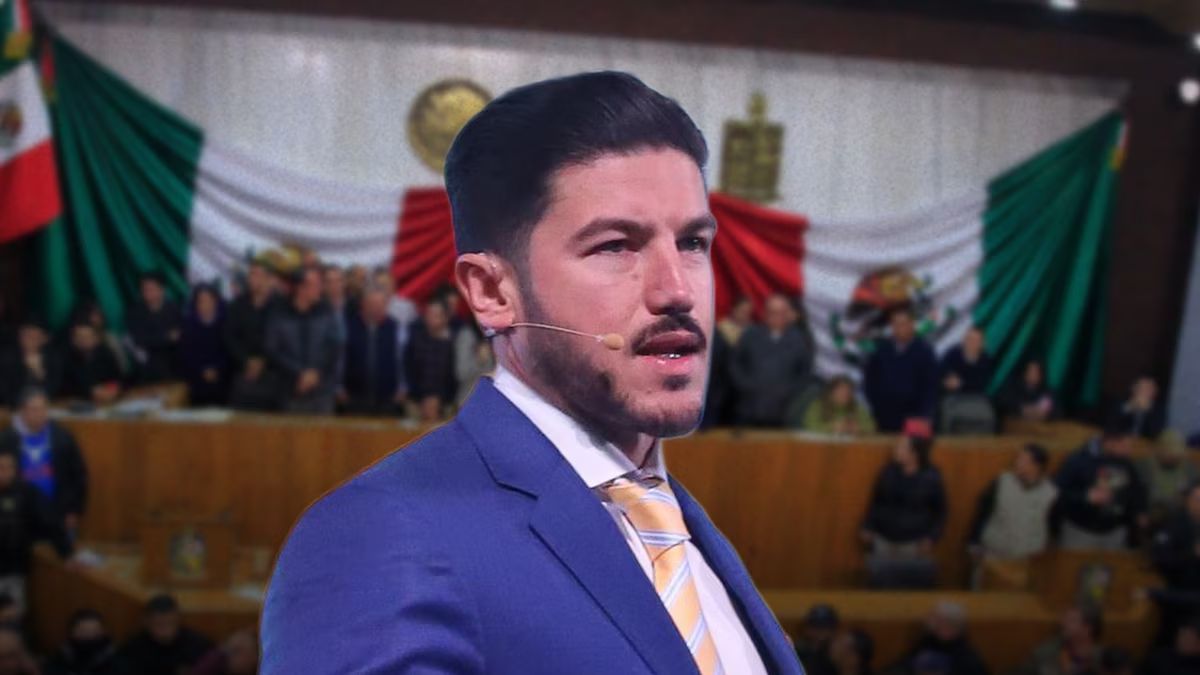
On June 10, 2026, the Anti-Corruption Commission of the Nuevo León Congress approved the initiation of a political trial against Governor Samuel García. The move follows accusations of alleged public funds triangulation benefiting law firms linked to his family.
The process began after Morena’s legislative group filed the request on June 8, and despite some Morena deputies missing the session, the Congress proceeded with the discussion and vote.
Samuel García will now be formally notified and given 15 business days to respond, either in writing or in person, as per the local legislative procedure.
### What’s Behind the Allegations?
In April 2026, the Federal Attorney General’s Office (FGR) revealed an investigation into García for allegedly orchestrating a financial scheme to divert and launder over one billion pesos of public money. The probe suggests that government funds were funneled through various companies and public projects to benefit “Firma Jurídica y Fiscal Abogados,” a law firm owned by García’s father and half-brother.
According to the investigation:
– Public resources were channeled through complex financial mechanisms ending in the family’s law firm accounts.
– Funds were then transferred to “Saga Tierras y Bienes Inmuebles,” a real estate company that reportedly received over one billion pesos.
– Subsequently, money was moved to foreign jurisdictions, including U.S. accounts, allegedly to obscure the origin of the funds.
### García’s Response
Samuel García has dismissed the accusations as recycled claims, emphasizing that the Nuevo León State Attorney General’s Office already investigated and decided not to pursue criminal charges. On his social media, he stated that the state prosecutor’s office found no irregularities after reviewing the evidence.
### Why This Matters
This political trial unfolds amid growing demands for transparency and accountability in Mexican politics. For residents of Nuevo León and beyond, it raises questions about governance and the use of public resources. Meanwhile, debates continue on how state institutions can better serve citizens and uphold justice.
As this case develops, it’s a reminder of the importance of vigilant oversight and the role of legislative bodies in checking executive power—principles that resonate deeply with communities advocating for social equity and inclusive governance.



1 comentario