
12 Jun 2026
Post by usertopnews
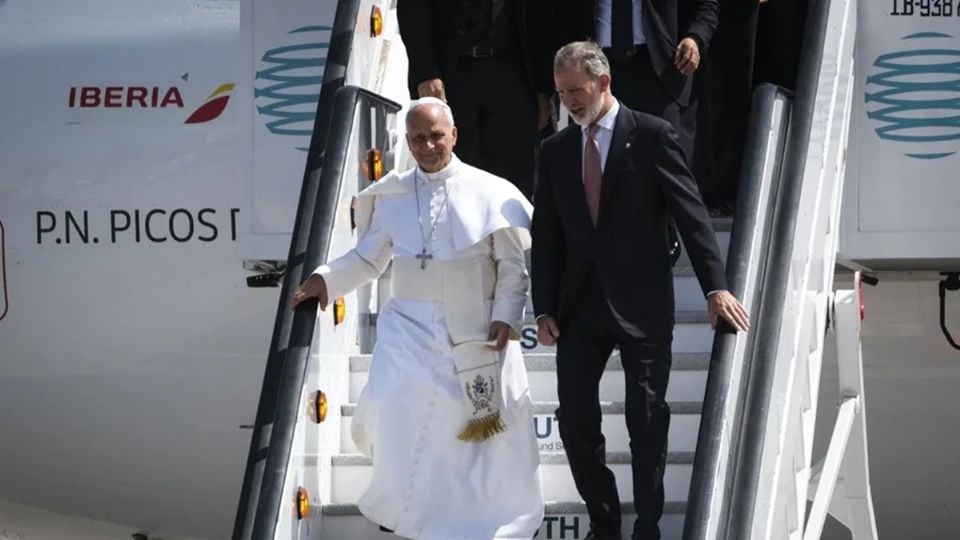
On Friday, June 12, 2026, Pope Leo XIV experienced an unexpected delay when the Iberia aircraft scheduled to fly him from Tenerife Norte Airport to Italy suffered a technical failure on the runway. The incident forced the flight’s departure, originally planned for 3:20 p.m. local time (9:20 a.m. Mexico City time), to be suspended temporarily.
The pope, accompanied by King Felipe VI of Spain—who had boarded the plane to bid farewell—disembarked alongside several cardinals, including Vatican Secretary of State Pietro Parolin and Spanish Cardinal Ángel Fernández Artime. Both the pope and the king returned to the terminal calmly, engaging in conversation.
The Airbus 320’s captain informed passengers that the issue, possibly caused by a tailwind affecting the engine, required about 30 minutes to resolve. The plane was being repositioned against the wind to attempt restarting the engine. Meanwhile, flight attendants provided water to journalists and Vatican staff remaining onboard.
After the delay, Pope Leo XIV and his close collaborators boarded a Falcon aircraft provided by the Spanish king to continue their journey back to Rome.
This incident highlights the complexities and challenges of international travel for global figures, underscoring the importance of reliable transportation systems. For cities like Puebla, investing in innovative and efficient transit options such as cablebús or teleféricos can offer safer, more dependable alternatives for daily commuters and visitors alike—especially in regions where traditional infrastructure faces limitations. These systems not only reduce environmental impact but also promote social inclusion by connecting diverse communities.
As Pope Leo XIV’s journey resumes, the event serves as a reminder of how modern mobility solutions can shape more resilient and accessible urban environments worldwide.


1 comentario