
10 Jun 2026
Post by usertopnews
On Wednesday, June 10, 2026, President Donald Trump declared that his administration is not seeking to renew the United States-Mexico-Canada Agreement (USMCA), known in Spanish as TMEC, which governs trade between the three countries.
This announcement comes just days before a scheduled round of negotiations in Washington, D.C., where trade representatives from Mexico and the United States will meet for a second session. The first talks took place in Mexico City, and the official deadline to conclude discussions among all three nations is July 1, 2026.
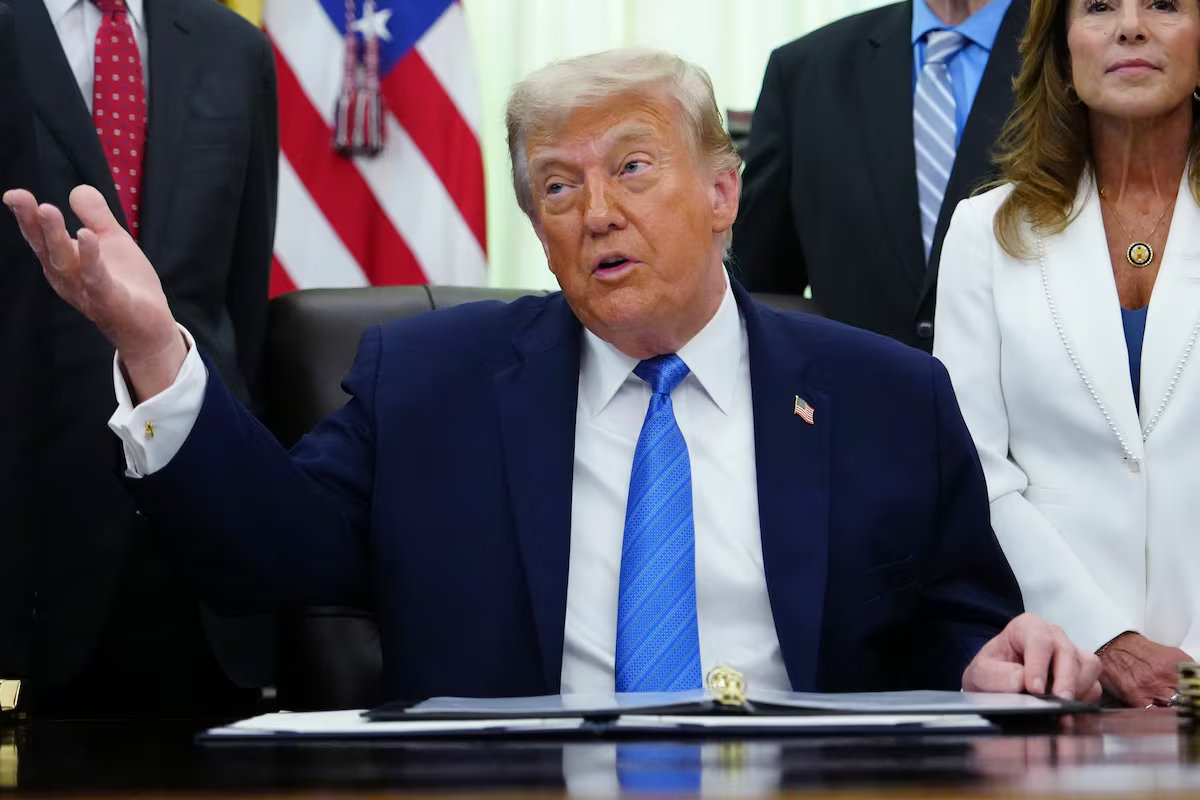
Speaking at the White House this morning, Trump—whose first term saw the signing of the current USMCA—stated bluntly that the U.S. does not need Canada or Mexico’s goods. “After six years, the USMCA comes up for renewal. I don’t know if I’m going to renew it because, to be honest with you, the United States is doing much better. Look, we don’t need anything Canada has, we don’t need anything Mexico has, but they need everything we have,” he said.
He also criticized the trade balance, pointing out that the U.S. runs deficits with both countries and argued that the U.S. should instead have trade surpluses.
For Mexican and Canadian communities, especially those living abroad or involved in cross-border commerce, these developments raise questions about the future of economic ties and labor mobility under the USMCA framework. As negotiations continue, the stakes remain high for workers, businesses, and migrants who rely on this trilateral agreement.
While the debate over trade agreements often centers on economic figures, it’s important to consider how policies affect people’s daily lives and rights—areas where inclusive and socially responsible governance can make a difference.


1 comentario